
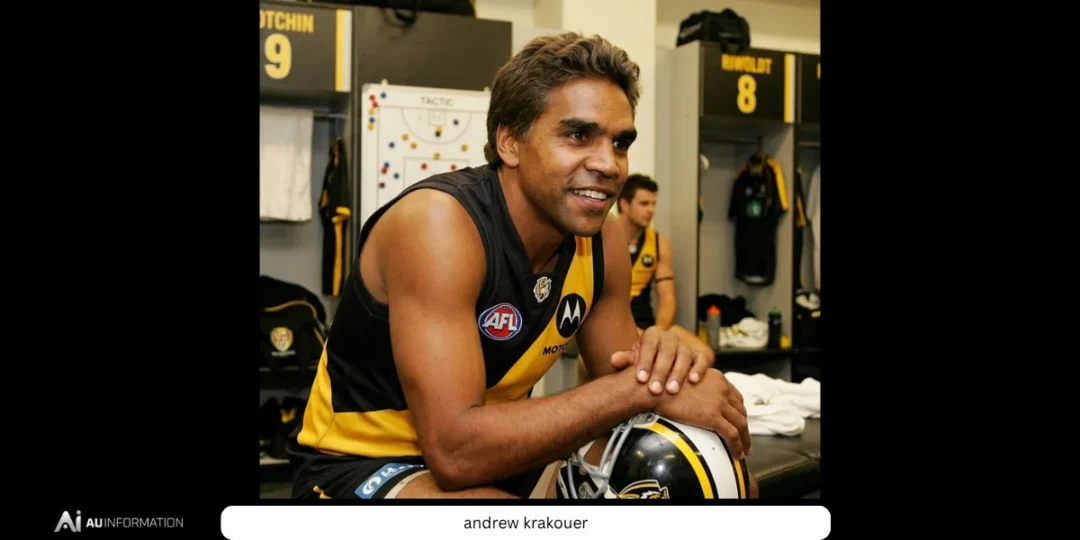
Introduction: A Football Talent of Skill, Grit and Redemption
Andrew Krakouer was one of the most naturally talented Australian Rules footballers of his generation. Known for his pace, creativity, goal sense and ability to produce moments of brilliance, he caught the imagination of AFL fans throughout his career.
But Andrew Krakouer’s story was about so much more than football talent. It was a rollercoaster ride of incredible highs, personal trials and tribulations, grit and one of the most inspiring comebacks in the history of modern Australian football.
Krakouer arrived with a proud legacy from day one as one of the most famous footballing families in Australia. His father, Jim Krakouer, and uncle, Phil Krakouer, were star VFL/AFL players, and Andrew continued the family tradition with his own exciting style of play.
Krakouer has rebuilt himself through hard work and perseverance after a series of setbacks threatened to end his AFL career. In 2011 he made a remarkable sporting comeback with Collingwood, returning to the AFL where he won the AFL Mark of the Year and performed memorably in the 2011 AFL Grand Final.
Andrew Krakouer’s career is a story of how adversity can be turned into success through resilience, self-belief and determination.
Early Life and the Krakouer Football Tradition
Andrew Krakouer was born on 24 June 1983 in Perth, Western Australia, into a family with strong links to Australian rules football.
The name Krakouer was already in footballing folklore thanks to the deeds of both his father and uncle.
A Family of Football Excellence
Jim Krakouer and Phil Krakouer were always exciting footballers throughout their VFL careers. They were known for
Excellent skill
Football Creativity
Ability to strike.
Fun play styles
Andrew was raised in a footballing environment and it gave him a great grounding. He had a feel for the game from a young age and inherited many of the qualities associated with the Krakouer football name.
But Andrew was determined to make his own identity and not just follow in the footsteps of his family members.
Richmond Career: The Start of an AFL Journey
Andrew Krakouer was plucked from the WAFL by Richmond and his skills shone through immediately.
He featured primarily as a small forward and developed a reputation as a dangerous attacking player capable of turning games with moments of individual brilliance.
His strengths were, 1.
Rapid pace
Good sense of goal
Excellent marking skills
Creative choices
Ability to work a crowd
Krakouer played 102 AFL games during his time at Richmond, becoming one of the club’s most exciting players.
But his career was not without important setbacks that interrupted his progress.
The Hardships and the Struggle to Return
Professional athletes face setbacks that test their career and personal mettle, Andrew Krakouer among them.
Legal problems hampered his AFL journey and his future at the top level of football was uncertain. For many players, that can mean the end of a professional career.
But Krakouer didn’t give up. He turned his life around and made a comeback in football through hard work and resolve.
Important qualities were demonstrated in his decision to continue with the game:
Accountability
Determination
Mental toughness
Concentrate on improvement
His return would be one of the most memorable stories in the history of Australian football.
WAFL Redemption Swan Districts
When he left the AFL environment, Krakouer returned to WA and played for Swan Districts in the WAFL.
This period was a turning point in his career.
Krakouer saw the move to lower level football as an opportunity rather than a setback and used the chance to rebuild his confidence and prove he could still match it at the elite level.
His performances were excellent.
He won the coveted Sandover Medal in 2010, the award for the WAFL’s fairest and best player. He also played a key role in Swan Districts winning the WAFL premiership.
“That period proved that talented athletes can get through difficult times with a focus on development and performance.
Collingwood’s Incredible Recovery
Collingwood signed Andrew Krakouer in 2011 and he returned to AFL football then.
His comeback attracted the attention of football fans across Australia as many thought his AFL career was already over.
Instead, Krakouer had a stellar season.
He became a key attacking player for Collingwood and proved experience, maturity and determination could make a second chance.
2011 AFL Wrap-up
Some of the biggest achievements of his return were:
AFL Mark of the Year recipient
Participating in the 2011 AFL Grand Final
Grand Final treble
One of the league’s most inspirational comeback stories
His 2011 season proved that careers are not always derailed by setbacks. The biggest achievements can come from the hardest challenges.
Football Strength, Style of Play
Andrew Krakouer was loved for the creativity and excitement he brought to the game.
He had the attributes of a small forward which made him dangerous around goal.
Speed & Agility
Krakouer’s speed was useful in getting away from defenders and creating scoring chances.
Purposeful
“He was really good at knowing where the chances were going to come from and a lot of the time made smart decisions in the forward line.
Marking Capability
He may not have been the biggest man but he could take the most spectacular marks including the famous AFL Mark of the Year .
His style was a reflection of the traditional strengths attributed to the Krakouer football family – skill, confidence and entertainment.
Career Lessons from Andrew Krakouer
Andrew Krakouer’s story offers important lessons for athletes and professionals facing adversity.
1. Failures Are Not Your Destiny
A bad patch does not have to decide the fate of a career. Krakouer’s comeback was a lesson in perseverance.
2. Opportunities are to be Earned
His WAFL success proved rebuilding is a long-term commitment and performance.
3. Experience Can Be an Asset
More mature and focused, Krakouer returned to AFL football and it proved challenges can foster development.
Challenges Faced by Most Professional Athletes
Professional sport is not only about the performance.
Athletes often possess:
Public Expectations
Players are always under scrutiny from fans and media.
Doubt about career
Injuries, form changes, personal struggles … opportunities can come and go quickly.
Keeping Your Mind Strong
In many cases, the ability to bounce back from adversity is as important as physical ability.
Krakouer’s career is a lesson in the importance of resilience in elite sport.
Life After AFL Football
Andrew Krakouer retired from AFL football in 2013, after a remarkable career of extraordinary achievements and great challenges.
After his retirement, he continued to be active in football, including:
Work in media
Coaching
Community participation
Backing Indigenous representation
His own experiences helped him teach younger players the importance of development, responsibility and confidence.
The legacy of Andrew Krakouer
Andrew Krakouer died aged 42 in 2025 after a suspected heart attack.
Across Australian football, his death was mourned, with players, clubs and supporters paying tribute to his talent, personality and impact outside the game.
Among his bequests are:
An AFL comeback fairytale to inspire
An extension of the famous Krakouer football name.
Contributions to the representation of Indigenous football
Inspiration for athletes who overcome adversity
Conclusion: Remembering Andrew Krakouer’s Incredible Journey
Andrew Krakouer’s career was one of the most compelling stories in Australian football. He was a player blessed with extraordinary talent, but his true legacy came from his ability to overcome challenges and return to the AFL stage.
From his early days at Richmond to his memorable return with Collingwood, Krakouer showed that resilience can be as powerful as natural talent.
His journey reminds sporting communities that success is not always a straight path. Sometimes the best work is done by people who have been hurt, who learned from their hurt, and who still fight for another chance.
Andrew Krakouer will be remembered as much for his resilience and redemption as for his footballing brilliance, and for the belief that second chances can produce some of the most memorable moments in sport.




No Comments