
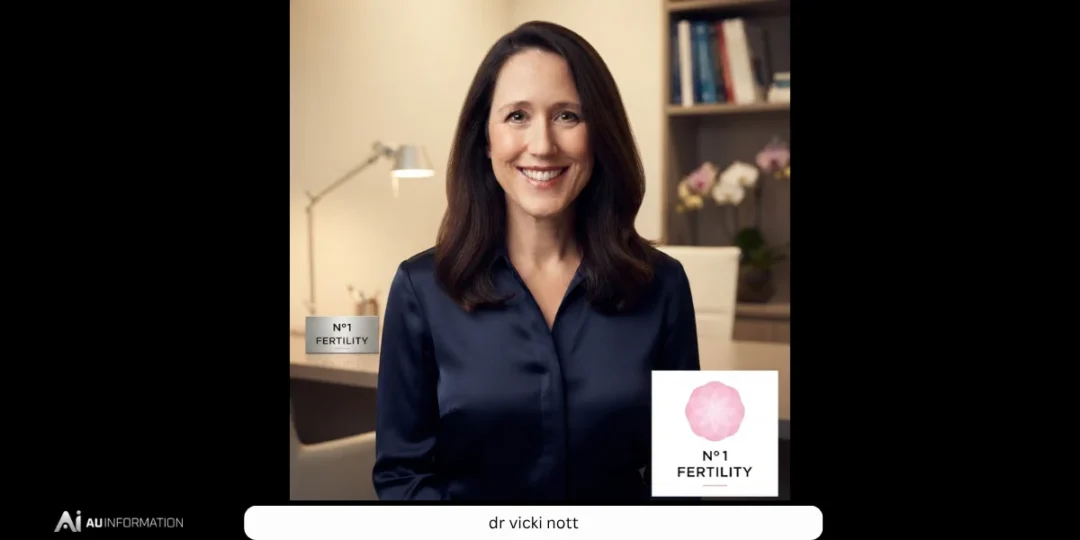
Building a family is one of the most important journeys many people experience, but for some, achieving pregnancy can involve complex medical, emotional and personal challenges. Advances in reproductive medicine have transformed fertility care, giving thousands of Australians new opportunities to become parents.
Among the specialists contributing to this field is Dr Vicki Nott, a highly experienced Australian fertility specialist, obstetrician and gynaecologist based in Melbourne. With more than three decades of experience in women’s health and reproductive medicine, Dr Nott has supported thousands of individuals and couples through fertility assessments, assisted reproductive treatments and pregnancy care.
Her career reflects the evolution of modern fertility medicine in Australia, where personalised treatment, advanced technology and compassionate patient support have become central to helping people achieve their family goals.
Who Is Dr Vicki Nott?
Dr Vicki Nott is a Melbourne-based fertility specialist with extensive experience in reproductive medicine, obstetrics and gynaecology.
Over her long medical career, she has focused on helping patients navigate different stages of reproductive health, from fertility planning and assessment to pregnancy management and complex reproductive challenges.
She is recognised for her work in areas including:
- IVF treatment
- Egg freezing
- Sperm freezing
- Fertility assessments
- Endometriosis management
- Polycystic ovary syndrome (PCOS)
- Pregnancy care
- Complex fertility cases
Her approach combines medical expertise with personalised care, recognising that every patient’s fertility journey is different.
Medical Education and Professional Background
Dr Vicki Nott has built her career on extensive medical training and specialist qualifications.
Her professional qualifications include:
- Bachelor of Medicine and Bachelor of Surgery (MBBS)
- Fellowship of the Royal Australian and New Zealand College of Obstetricians and Gynaecologists (FRANZCOG)
- Master of Reproductive Medicine from the University of New South Wales
Her postgraduate study in reproductive medicine provided advanced knowledge of fertility science, assisted reproduction and reproductive health management.
This combination of obstetric and fertility expertise allows her to support patients across a wide range of reproductive needs.
More Than 30 Years Supporting Women’s Health
Women’s health has been a central focus throughout Dr Nott’s career.
Over more than 30 years, she has worked with patients facing many different reproductive experiences, including:
- Difficulty conceiving naturally
- Age-related fertility concerns
- Hormonal conditions
- Reproductive health disorders
- Pregnancy complications
- Family planning decisions
A significant part of fertility medicine involves not only medical treatment but also helping patients understand their options.
Fertility decisions can involve complex choices, and experienced specialists play an important role in explaining available pathways and creating realistic treatment plans.
Experience Helping Thousands Build Families
One of the most notable aspects of Dr Vicki Nott’s career is her extensive experience helping patients achieve successful pregnancies.
Throughout her professional journey, she has been involved in the delivery of more than 10,000 babies and has supported many families through fertility treatment and pregnancy care.
Behind every successful fertility journey is often a combination of medical knowledge, careful planning and emotional support.
A fertility specialist’s role involves:
- Understanding a patient’s medical history
- Identifying possible causes of infertility
- Recommending suitable treatment options
- Monitoring progress carefully
- Supporting patients through uncertainty
This personalised approach has become a key feature of modern fertility care.
Fertility Treatments and Services
Modern fertility medicine offers a wide range of options depending on individual circumstances.
IVF Treatment
In vitro fertilisation (IVF) is one of the most recognised fertility treatments.
During IVF, eggs and sperm are combined in a laboratory environment, allowing fertilisation to occur outside the body before an embryo is transferred to the uterus.
IVF may be considered for situations such as:
- Blocked fallopian tubes
- Male fertility factors
- Unexplained infertility
- Age-related fertility challenges
- Previous unsuccessful conception attempts
A specialist assessment helps determine whether IVF is the most appropriate option.
Egg Freezing
Egg freezing has become increasingly discussed in Australia as more people consider delaying parenthood.
The process allows eggs to be collected and stored for possible future use.
Reasons some individuals consider egg freezing include:
- Career planning
- Personal circumstances
- Medical reasons
- Concerns about future fertility
However, fertility specialists emphasise that egg freezing does not guarantee future pregnancy and should involve informed decision-making.
Fertility Assessments
A fertility assessment helps identify potential factors affecting conception.
These assessments may involve:
- Medical history reviews
- Hormone testing
- Ultrasound examinations
- Semen analysis
- Evaluation of reproductive health
Early assessment can provide valuable information and help guide appropriate treatment.
Managing Conditions Such as Endometriosis and PCOS
Conditions affecting reproductive health can significantly influence fertility.
Endometriosis
Endometriosis occurs when tissue similar to the uterine lining grows outside the uterus. It can contribute to pain and fertility difficulties.
Specialist care can help patients understand management options and fertility implications.
Polycystic Ovary Syndrome (PCOS)
PCOS is a common hormonal condition that can affect ovulation and fertility.
Treatment approaches may include lifestyle strategies, medication and fertility support depending on individual needs.
The Changing Landscape of Fertility Care in Australia
Fertility medicine has changed significantly in recent years.
Several trends are shaping the future of reproductive healthcare:
- Increased awareness of fertility preservation
- Greater use of advanced IVF technologies
- Improved understanding of reproductive health conditions
- More personalised treatment approaches
- Earlier fertility education
Many Australians are now seeking information about fertility earlier in life rather than waiting until challenges appear.
Common Mistakes People Make About Fertility
Fertility decisions can be influenced by misinformation or unrealistic expectations.
Some common mistakes include:
Waiting Too Long Without Assessment
Age can affect fertility, so seeking professional advice earlier may provide more options.
Assuming Fertility Problems Are Only Female Issues
Both male and female factors can contribute to fertility challenges.
Focusing Only on Treatment Success Stories
Every fertility journey is different, and outcomes depend on many factors.
Avoiding Medical Advice
Professional assessment provides clearer information than relying on assumptions or online information alone.
The Importance of Emotional Support During Fertility Treatment
Fertility treatment can be physically and emotionally demanding.
Many patients experience:
- Stress
- Uncertainty
- Disappointment
- Hope and excitement
A good fertility specialist recognises that care involves more than medical procedures. Communication, empathy and emotional support are important parts of the treatment experience.
The Future of Reproductive Medicine
The future of fertility care is likely to involve continued advances in technology and personalised medicine.
Emerging areas include:
- Improved embryo assessment techniques
- Better genetic testing options
- More precise fertility planning
- Advanced reproductive research
As scientific understanding improves, fertility treatment continues becoming more personalised and effective.
Conclusion
Dr Vicki Nott represents the expertise, experience and patient-focused approach that define modern fertility medicine in Australia.
With more than 30 years in women’s health, extensive reproductive medicine training and experience supporting thousands of families, she has contributed to an area of healthcare that has changed countless lives.
Her work highlights the importance of combining medical science with compassionate care. As fertility technology continues to advance and more Australians seek support in building families, specialists like Dr Vicki Nott remain an important part of the future of reproductive healthcare.




No Comments