
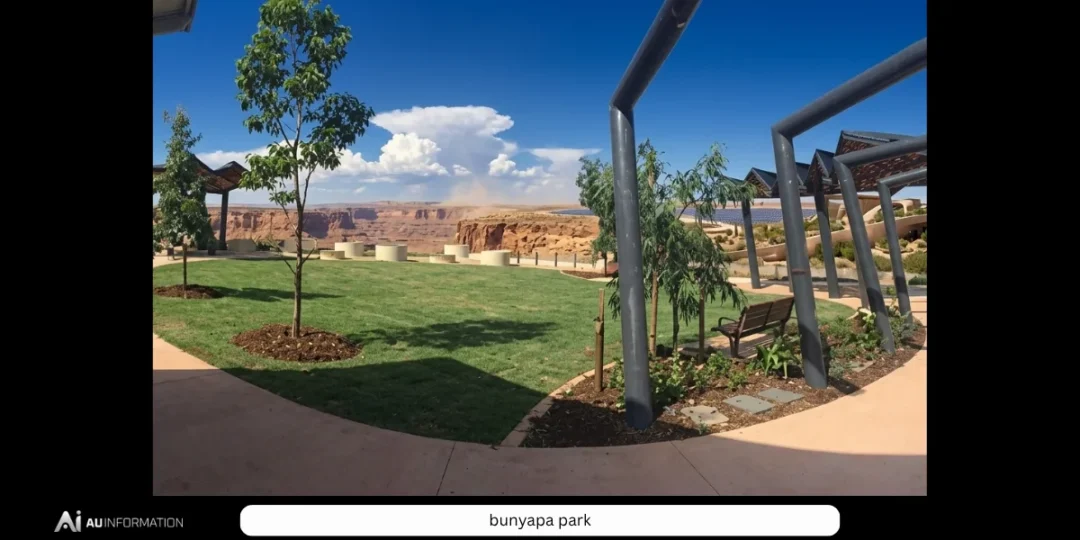
In the heart of Brisbane’s rapidly changing West End, Bunyapa Park represents far more than an ordinary suburban park. Located around Vulture and Thomas streets, the public space has developed into an important meeting point where recreation, community activity, Indigenous culture and social support come together.
Formerly known as the West End Urban Common, the park was officially renamed Bunyapa Park in December 2017. The name was suggested by Aboriginal activist Sam Watson, a respected figure in Brisbane’s Indigenous community and an important advocate for Aboriginal rights.
Today, Bunyapa Park provides residents with accessible green space in one of inner Brisbane’s most densely populated neighbourhoods. At the same time, its history and community use have given the site a cultural significance that extends well beyond its physical boundaries.
Where Is Bunyapa Park?
Bunyapa Park is situated in West End, Brisbane, Queensland, around the intersection of Vulture Street and Thomas Street.
Its inner-city location is particularly significant. West End has experienced substantial residential development and population growth, increasing demand for public spaces where residents can relax, exercise, meet friends and participate in community activities.
Rather than functioning simply as decorative landscaping, Bunyapa Park provides an everyday public environment for:
- Recreation and informal exercise
- Community gatherings
- Cultural events
- Live entertainment
- Social activities
- Public celebrations
- Community support initiatives
Its accessibility makes it an important piece of public infrastructure within the broader West End neighbourhood.
From West End Urban Common to Bunyapa Park
The history of the site is central to understanding its present identity.
The park was previously known as the West End Urban Common, reflecting its role as a shared public space. In December 2017, it received its current name, Bunyapa Park.
The renaming was not merely a change of signage. It helped strengthen the site’s connection with Aboriginal culture and the history of the local community.
The name was suggested by Sam Watson, who was well known for his activism, community leadership and advocacy for Aboriginal Australians.
This connection gives Bunyapa Park an important historical dimension. Public spaces can carry cultural meaning, particularly when their names and artworks reflect the people and communities whose stories are connected to a neighbourhood.
The Legacy of Sam Watson
Sam Watson remains an important figure associated with Bunyapa Park.
As an Aboriginal activist and community leader, Watson contributed significantly to discussions surrounding Indigenous rights and Brisbane’s Aboriginal community. His involvement in the naming of the park helped establish a connection between the public space and that broader cultural history.
A prominent mural at the park by artist Warraba Weatherall commemorates Watson and his contribution.
The mural transforms the park into something more than a recreational area. It creates a visible reminder of an individual whose work influenced Brisbane’s Indigenous community and Australia’s wider conversation about Aboriginal rights.
For visitors, public art such as this provides an opportunity to encounter local history outside conventional museums or galleries.
Indigenous Culture and Community Events
Bunyapa Park has developed a strong role in cultural programming.
The park has hosted activities associated with NAIDOC Week, giving residents and visitors opportunities to participate in events celebrating Aboriginal and Torres Strait Islander history, culture and achievements.
It has also provided space for:
- Live music
- Community festivals
- Public gatherings
- Cultural celebrations
- Local performances
- Community-led activities
This type of programming demonstrates the importance of public parks in contemporary cities. A successful urban park is not necessarily defined only by its landscaping or physical facilities. Its real value can come from how effectively people use the space.
A Park With a Social Purpose
One of Bunyapa Park’s most significant characteristics is its role in community support.
Community organisations have used the area to provide food and assistance to people experiencing homelessness. This illustrates how public spaces can become important points of contact between community organisations and vulnerable residents.
The issue is particularly relevant in inner-city neighbourhoods, where housing pressures, homelessness and social inequality can exist alongside rapid development and rising property values.
Bunyapa Park therefore serves several groups simultaneously. It can be a place for recreation during the day, a venue for cultural activity during an event and a point of community assistance for people experiencing hardship.
That flexibility is one of the defining strengths of genuinely useful public space.
Why Green Space Matters in Inner Brisbane
Urban green space becomes increasingly valuable as cities become more densely populated.
Residents need places where they can temporarily escape buildings, traffic and commercial activity without travelling long distances.
A well-used community park can provide several benefits:
Physical Wellbeing
Parks encourage walking, informal exercise and outdoor activity.
Mental Wellbeing
Access to outdoor environments can provide a valuable break from the pressures of urban life.
Social Connection
Public spaces create opportunities for residents to meet people outside their immediate households or workplaces.
Community Identity
Local parks can become gathering points that give neighbourhoods a stronger sense of identity.
Cultural Expression
Events, murals and performances allow communities to tell stories and celebrate their heritage.
Bunyapa Park demonstrates how these different functions can overlap in a relatively compact inner-city environment.
Bunyapa Park and the Changing West End
West End has undergone considerable transformation over recent decades.
New apartments, businesses and infrastructure have changed the physical and demographic character of the suburb. Such development can bring investment and new residents, but it can also increase pressure on existing public amenities.
This makes parks such as Bunyapa increasingly important.
As residential density rises, maintaining accessible public spaces becomes a fundamental urban-planning issue. People need somewhere to gather that does not require spending money.
A café or shopping centre may provide social interaction, but a public park offers something fundamentally different: open access.
The Importance of Public Art
The Warraba Weatherall mural adds another layer to Bunyapa Park’s identity.
Public art can perform several functions simultaneously. It can beautify a location, communicate history and encourage visitors to engage with a particular story.
In this case, the mural’s connection to Sam Watson provides an opportunity to remember his contribution to Aboriginal rights and Brisbane’s Indigenous community.
For urban planners, this is an important lesson: public art is most powerful when it has a meaningful relationship with its location.
A Useful Destination for Visitors
People visiting Brisbane who want to explore beyond the city’s major tourist attractions can find value in community spaces such as Bunyapa Park.
A visit can easily be combined with exploring West End’s broader collection of cafés, restaurants, shops and cultural venues.
Rather than treating the park as an isolated tourist attraction, it is better understood as part of the everyday life of the suburb.
Visitors should also remember that community parks are primarily public spaces for local residents. Respecting people using the park, keeping the area clean and following event or local regulations helps preserve its welcoming character.
Common Misconceptions About Bunyapa Park
One common mistake is to view Bunyapa Park simply as another piece of green space.
Its significance is broader because it combines:
- Urban recreation
- Indigenous cultural recognition
- Public art
- Community events
- Social support
- Neighbourhood identity
Another mistake is to judge a park solely by its physical facilities. The success of a community space should also be measured by how people use it and whether different sections of the community feel welcome there.
The 2026 Incident and Responsible Reporting
Bunyapa Park was also associated with a fatal altercation in 2026, bringing renewed media attention to the location.
Such an incident should be treated carefully. A serious crime or death occurring in a public park is an important news event, but it should not automatically define the character of the entire space.
Responsible coverage should distinguish between the incident itself and the park’s broader history as a community, cultural and recreational facility. Unless authorities or a court establish particular facts, allegations should also be presented as allegations rather than established conclusions.
This distinction is especially important when writing about community locations that are used by thousands of people over time.
The Future of Bunyapa Park
The future importance of Bunyapa Park will likely depend on how effectively Brisbane continues to balance population growth with accessible public space.
As West End becomes increasingly urbanised, parks can play a crucial role in maintaining liveability.
The strongest future uses are likely to involve a combination of:
- Community programming
- Indigenous cultural events
- Public art
- Recreation
- Social-support initiatives
- Informal gatherings
- Green-space preservation
The challenge for urban authorities and communities is to ensure that development does not reduce the accessibility or character that makes such places valuable.
Conclusion
Bunyapa Park is a compelling example of how a relatively small urban park can become much more significant than its physical size suggests.
Its history as the former West End Urban Common, its renaming in 2017, its association with Sam Watson, the Warraba Weatherall mural and its use for cultural events and community support have collectively created a distinctive identity.
For West End residents, the park offers something particularly valuable: a freely accessible place to meet, relax, celebrate culture and connect with the wider community.
Its story also illustrates a broader principle of modern urban planning. Cities are not made successful solely by buildings, roads and commercial developments. They also depend on public spaces that allow people to interact, remember their history and support one another.
In that respect, Bunyapa Park is not simply a park in Brisbane. It is part of the social and cultural fabric of West End.



No Comments