
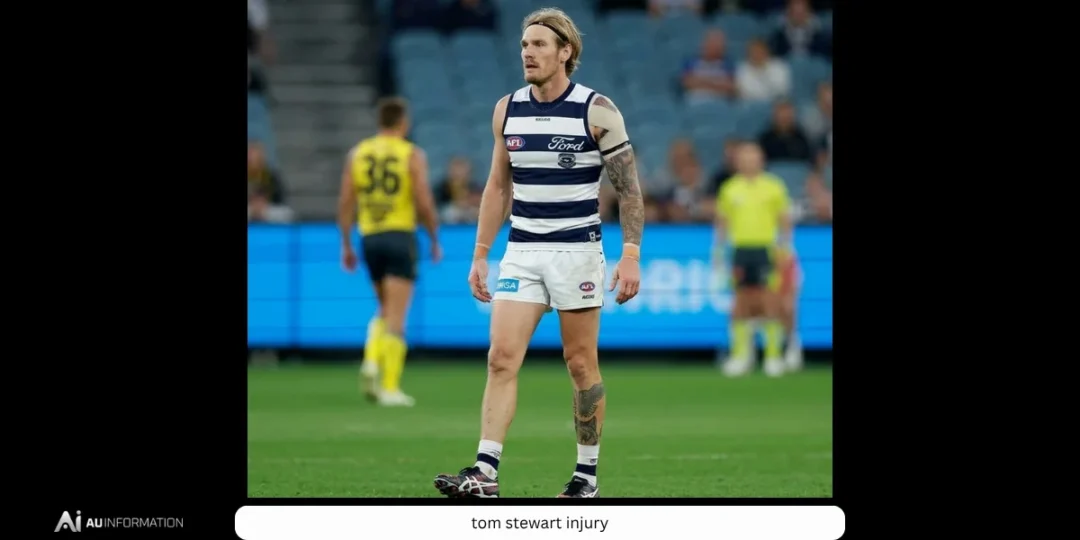
Introduction: The Defender Who Continues to Overcome Challenges
Tom Stewart is widely regarded as one of the best defenders in modern Australian rules football. As a key player for the Geelong Cats, Stewart has built a reputation through his intercept marking, defensive intelligence, leadership, and ability to influence games from the backline.
However, like many elite athletes, Stewart’s career has not been without challenges. Over recent seasons, injuries have become an important part of his football story, with setbacks testing his physical ability and determination.
From a serious Lisfranc foot injury that ended his 2021 season to a more recent period in the AFL concussion protocol, Stewart has faced difficult moments away from the field. Each time, he has shown the resilience and professionalism that have made him one of Geelong’s most respected players.
His injury history attracts significant attention because of his importance to the Cats’ defensive structure. When Stewart is unavailable, Geelong loses one of the AFL’s most reliable intercept defenders and one of its most experienced leaders.
Tom Stewart’s Importance to Geelong
Becoming One of the AFL’s Elite Defenders
Tom Stewart’s rise in Australian rules football has been remarkable. Unlike many AFL stars who enter the competition as highly rated junior prospects, Stewart took a different pathway before becoming an AFL player.
His development helped create a reputation as a player who understands the game at an elite level.
Stewart is known for:
- Reading the play before opponents
- Taking important intercept marks
- Providing defensive leadership
- Creating attacking opportunities from defence
- Remaining calm under pressure
Modern AFL defenders are no longer only responsible for stopping goals. They must also help start attacking movements, and Stewart has become one of the best examples of this modern defensive role.
Tom Stewart Injury History
The 2021 Lisfranc Foot Injury
One of the most serious injuries of Tom Stewart’s career occurred in 2021 when he suffered a Lisfranc foot injury.
Lisfranc injuries involve damage to the joints and ligaments in the middle area of the foot and can be particularly difficult for athletes because they affect movement, balance, and power.
For an AFL player, this type of injury creates major challenges because football requires:
- Explosive acceleration
- Quick changes of direction
- Jumping ability
- Strong foot control
Stewart required surgery and his 2021 season came to an early end.
The injury represented a significant setback because he was already established as one of Geelong’s most important players.
Returning From a Major Foot Injury
The Mental and Physical Challenge of Recovery
Recovering from a serious injury requires much more than physical rehabilitation.
Elite athletes must manage:
- Patience during recovery
- Maintaining confidence
- Rebuilding match fitness
- Returning safely rather than quickly
For Stewart, the goal was not simply to return to the AFL but to return at the level required to remain one of the competition’s best defenders.
His successful comeback demonstrated his commitment to preparation and recovery.
Concussion Protocol and Recent Injury Concerns
Managing Head Knock Recovery
In 2026, Tom Stewart attracted attention after entering the AFL concussion protocol following a head knock during Geelong’s match against Adelaide.
The incident highlighted the increasing importance of player safety in Australian rules football.
The AFL concussion guidelines require players who experience possible concussion symptoms to complete a structured recovery process before returning to competition.
This process may include:
- Medical assessment
- Monitoring symptoms
- Gradual return to training
- Clearance from medical professionals
The priority is protecting players’ long-term health rather than rushing them back onto the field.
Why Stewart’s Injuries Matter to Geelong
A Critical Part of the Cats’ Defensive System
Tom Stewart’s value to Geelong goes beyond statistics.
His absence creates challenges because he provides several important qualities:
Defensive Organisation
Stewart helps organise teammates and maintain defensive structures.
Intercept Ability
His ability to read opposition attacks allows him to stop scoring opportunities before they develop.
Leadership Experience
As an experienced player, he provides guidance to younger teammates.
When an important defender misses games, teams often need to adjust their structures and responsibilities.
The Importance of Injury Management in Professional Sport
How Elite Athletes Return Successfully
Modern sports science has changed how athletes recover from injuries.
Successful rehabilitation usually involves:
- Medical supervision
- Strength and conditioning programs
- Controlled training progression
- Mental preparation
- Long-term planning
The biggest mistake athletes can make is returning before their body is ready.
A rushed comeback can increase the risk of further injury and create longer-term problems.
Lessons From Tom Stewart’s Injury Journey
1. Recovery Requires Patience
Serious injuries cannot always be solved quickly. A proper recovery process protects an athlete’s future.
2. Mental Strength Is Essential
Physical recovery is only one part of returning to elite sport. Confidence and determination are equally important.
3. Adaptability Helps Extend Careers
Players who adjust their training, preparation, and playing style can maintain success over many years.
Common Challenges Faced by AFL Players
Physical Demands
AFL requires:
- High-speed running
- Physical contests
- Repeated collisions
- Quick decision-making
These demands create significant injury risks.
Pressure to Return
Star players often feel pressure from clubs, supporters, and media to return quickly.
However, safe recovery must always come first.
Maintaining Performance After Injury
Returning from injury is only the beginning. Players must rebuild consistency and confidence.
Stewart’s career shows that elite athletes must continually overcome challenges.
Tom Stewart’s Future Outlook
Continuing His Legacy at Geelong
Despite injury setbacks, Tom Stewart remains one of Geelong’s most valuable players.
His future success will depend on:
- Maintaining physical health
- Managing workloads
- Continuing recovery practices
- Supporting younger teammates
Given his professionalism and previous ability to overcome challenges, Stewart has shown that he can continue performing at an elite level.
The Broader Impact of Stewart’s Story
An Example of AFL Resilience
Tom Stewart’s journey represents a broader lesson about professional sport.
Great athletes are not defined only by their best performances. They are also defined by how they respond when challenges appear.
His ability to recover from significant injuries has strengthened his reputation as a player with exceptional character.
Conclusion: Tom Stewart’s Strength Beyond the Football Field
Tom Stewart’s injury journey reflects the reality of elite Australian rules football. Even the most talented players face setbacks, but their response to those challenges often defines their careers.
From overcoming a serious Lisfranc foot injury to managing concussion concerns, Stewart has repeatedly demonstrated resilience and professionalism.
His importance to the Geelong Cats comes not only from his ability to take marks or stop goals but also from his leadership, preparation, and determination.
Tom Stewart remains one of the AFL’s premier defenders, and his continued ability to overcome adversity is a major reason why he is respected by teammates, opponents, and football supporters across Australia.




No Comments