
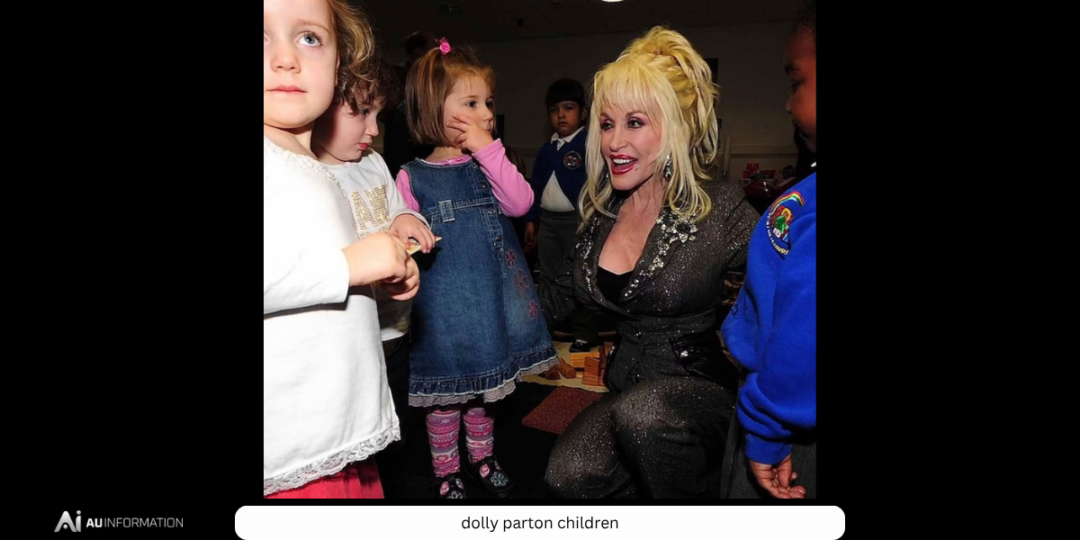
Dolly Parton is one of the most recognizable figures in country music, but her influence extends far beyond recording studios and concert stages. Over a career spanning decades, she has become a singer, songwriter, actress, businesswoman, philanthropist, and cultural icon. Yet one question continues to attract enormous curiosity: Did Dolly Parton have children?
The answer is no. Dolly Parton did not have biological or adopted children with her husband, Carl Dean. The couple married in 1966 and remained together for nearly six decades, until Dean died in 2025. Although Parton never became a mother herself, children have remained an important part of her personal life and charitable work.
In fact, Parton has created one of the most influential literacy programs associated with a celebrity. Through Dolly Parton’s Imagination Library, millions of children have received free books during their early years. Her story demonstrates that parenthood and a meaningful relationship with children are not necessarily the same thing. Parton has found another way to make a difference in young lives.
Did Dolly Parton Have Children?
Dolly Parton and Carl Dean never had children together. There are also no publicly documented adopted children in their family.
Their decision was a deeply personal aspect of their marriage. Parton has discussed the subject over the years, explaining that she once thought she might have children but eventually came to believe that her life had taken a different direction.
Rather than defining her life by what she did not have, Parton has frequently focused on what she was able to accomplish.
Her career became extraordinarily demanding, involving:
- Worldwide touring
- Recording and songwriting
- Acting and television
- Business ventures
- Philanthropic projects
- Community and educational initiatives
Parton has also spoken about how her lack of children allowed her greater freedom to pursue creative and charitable work.
Dolly Parton and Carl Dean’s Long Marriage
Any discussion about Dolly Parton’s children must begin with her relationship with Carl Dean.
The couple married on 30 May 1966, beginning one of the longest marriages involving a major American entertainment personality. Dean was famously private and generally avoided the celebrity spotlight surrounding his wife.
Their relationship was notably different from the highly publicized marriages often associated with Hollywood.
Parton became one of the world’s biggest entertainers, while Dean largely remained outside the entertainment industry. That separation between professional fame and private life helped them maintain a relationship that lasted for decades.
Carl Dean died in March 2025 at the age of 82. Parton subsequently paid tribute to her husband and the life they shared.
Their marriage therefore forms an important part of understanding Parton’s family story. She did not have children, but she did have a long-term family partnership that remained central to her life.
Why Didn’t Dolly Parton Have Children?
There is no single explanation that completely captures Parton’s decision.
She has acknowledged that she once wondered whether motherhood would become part of her future. In earlier years, she and Dean reportedly considered having children, but circumstances ultimately led them to choose a different path.
Parton’s demanding career was an important factor.
Raising children while maintaining the extraordinary schedule required by an international entertainment career would have involved difficult choices. Parton has suggested that not having children gave her the opportunity to devote herself more completely to her creative work and broader family.
It is important, however, to avoid reducing her decision to a simple career calculation.
Family decisions are personal, and Parton’s own reflections indicate that she came to accept her circumstances rather than regard them solely as a sacrifice.
Dolly Parton’s Relationship With Her Nieces and Nephews
Although Parton never became a mother, she grew up surrounded by siblings and extended family.
She was born into a large Tennessee family with 12 children, and that upbringing strongly influenced her understanding of family.
Parton has often maintained close relationships with her nieces and nephews. Her role within the family has sometimes been described as resembling that of a second mother or particularly supportive aunt.
Her relationship with children is therefore not simply an extension of her public image.
Family members have grown up knowing Parton as a relative rather than merely as a superstar.
This distinction matters because it illustrates how a person can have a substantial influence on younger generations without having children of their own.
Dolly Parton as a Role Model for Children
Parton’s influence on children extends well beyond her family.
Her music, films, books and public persona have introduced generations of young people to themes of imagination, perseverance, kindness and self-confidence.
She has also deliberately cultivated a public image that is approachable and humorous rather than distant.
Perhaps her most significant contribution to children, however, is educational.
Dolly Parton’s Imagination Library
Dolly Parton’s Imagination Library is arguably the clearest answer to the question of how Parton has influenced children despite not being a mother herself.
The programme began in 1995 in Parton’s home county in Tennessee. Its original goal was straightforward: encourage children to develop a love of reading by providing them with books.
The programme later expanded dramatically.
Today, participating children can receive free, age-appropriate books from birth through age five, with the programme operating in communities across several countries.
The idea is remarkably simple:
- A child is enrolled in the programme.
- Age-appropriate books are selected.
- Books are mailed directly to the child’s home.
- The child receives another book regularly.
- Reading becomes a familiar part of early childhood.
The programme has distributed hundreds of millions of books since its creation.
That achievement has transformed Parton’s relationship with children from a private family connection into an international educational legacy.
Why the Imagination Library Matters
Early childhood literacy has long been recognised as an important foundation for educational development.
Access to books can help children:
- Build vocabulary
- Develop listening skills
- Improve comprehension
- Encourage imagination
- Create positive reading habits
- Strengthen parent-child interaction
Parton’s programme is especially valuable because it removes one practical barrier: the cost of acquiring children’s books.
For families with limited resources, receiving a new book at home can make reading more accessible and enjoyable.
Parton’s approach also demonstrates an important principle in philanthropy: large-scale change does not always require complicated ideas.
The Imagination Library began with a simple proposition—give children books—and expanded because the concept was practical, measurable and easy for communities to support.
Dolly Parton’s Family Values
Parton’s childhood had a profound effect on her worldview.
Growing up in a large family in rural Tennessee meant that resources were limited, but family relationships were strong. Those experiences influenced many aspects of her later life.
Her songs frequently explore:
- Family
- Poverty
- Hard work
- Faith
- Home
- Childhood memories
- Personal resilience
The absence of children in her own household did not prevent those themes from becoming central to her work.
Instead, her family experiences became creative material and helped shape the compassionate public figure audiences came to know.
Common Misconceptions About Dolly Parton’s Children
Because Parton has such a strong connection with young people, several misconceptions have circulated about her family.
She did not secretly raise biological children
There is no reliable public evidence that Parton had biological children of her own.
She did not adopt children with Carl Dean
Despite occasional online speculation, Parton and Dean did not publicly raise adopted children together.
Her nieces and nephews are not her children
Parton’s close relationships with younger relatives are genuine, but they should not be confused with legal or biological parenthood.
The Imagination Library is not an adoption or childcare programme
It is an early-literacy initiative that provides books to young children.
Keeping these distinctions clear is important when discussing celebrity family histories.
Dolly Parton’s Lasting Influence on Children
Parton’s child-free life offers an interesting contrast with the enormous amount of time, energy and money she has devoted to children.
Rather than becoming a parent herself, she created institutions and opportunities that have affected millions of young people.
Her approach also challenges the assumption that a person’s legacy must follow a traditional family structure.
Parton has built her legacy through several interconnected areas:
- Music and songwriting
- Entertainment
- Entrepreneurship
- Family relationships
- Education
- Philanthropy
- Community support
The Imagination Library may ultimately become one of her most enduring achievements because its effects can continue through generations of readers.
What the Future Holds for Her Children’s Legacy
Dolly Parton’s influence on children is likely to continue long after individual songs or television appearances fade from popular culture.
The Imagination Library provides a particularly strong foundation for that future because it is designed around community participation rather than celebrity attention alone.
As the programme expands into new communities and continues delivering books to children, Parton’s name becomes associated with something considerably larger than entertainment.
It becomes associated with opportunity.
That may be the most important distinction in her family story: although Dolly Parton never raised children of her own, she has spent decades helping children discover books, stories and imagination.
Conclusion
Dolly Parton did not have biological or adopted children with Carl Dean, but saying only that she had no children leaves out a significant part of her story.
Her large family upbringing, close relationships with nieces and nephews and extraordinary commitment to children’s literacy reveal a woman who has maintained a deep connection with younger generations throughout her life.
Her marriage to Carl Dean lasted from 1966 until his death in 2025, providing the foundation for a remarkably private personal life behind her enormous public career.
Most importantly, Dolly Parton’s Imagination Library has allowed her to reach children on an extraordinary scale. By providing free books to young children, she transformed a personal interest in education into an international philanthropic movement.
Parton’s story ultimately offers a broader definition of family and legacy. Parenthood was not part of her personal journey, but nurturing imagination, encouraging children to read and supporting younger generations became a central part of the legacy she chose to build.




No Comments