
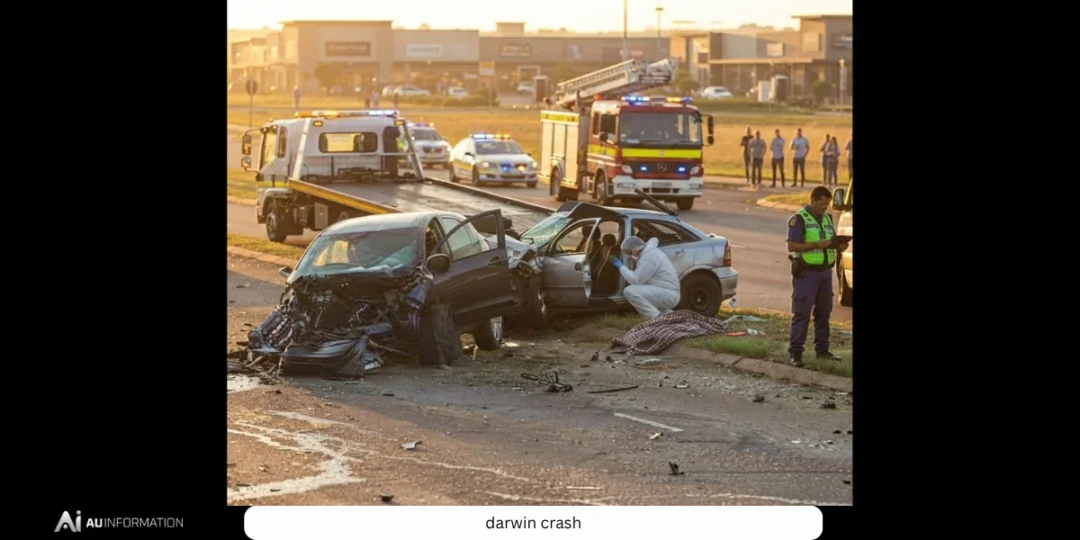
Road crashes in regional Australia often carry a devastating impact because they affect not only those directly involved but entire communities connected by distance, family and shared experiences. The Darwin crash tragedy on the Stuart Highway became one of the Northern Territory’s most serious recent road incidents, highlighting the dangers faced by drivers travelling on remote highways.
The fatal collision involved a Ford Ranger ute and a Toyota HiAce van near the Marrakai Road intersection on the Stuart Highway, south-east of Darwin. The crash resulted in the deaths of five people, with both vehicles catching fire after what authorities described as a high-speed head-on collision.
Beyond the immediate tragedy, the incident renewed public discussion about road safety in the Northern Territory, where long distances, remote conditions and highway driving risks continue to create significant challenges for motorists.
What Happened in the Darwin Crash?
The Stuart Highway crash occurred south-east of Darwin near the Marrakai Road intersection, an area used regularly by locals, freight operators and travellers moving through the Northern Territory.
According to early reports, the collision involved:
- A Ford Ranger utility vehicle
- A Toyota HiAce van
- A high-speed head-on impact
- A fire involving both vehicles after the crash
Emergency services responded quickly, with police, firefighters and paramedics attending the scene. However, the severity of the collision meant that no occupants survived.
The incident became a major news story across Australia because of the number of lives lost and the tragic circumstances surrounding the crash.
Emergency Response and Investigation
Following a serious road crash, emergency responders face complex challenges, particularly in regional areas.
The response to the Darwin crash involved multiple agencies, including:
- Northern Territory Police
- Fire and rescue teams
- Ambulance personnel
- Crash investigators
Emergency crews worked to secure the area, manage the vehicle fires and begin the process of determining what caused the collision.
Crash investigations typically examine several factors, including:
- Vehicle speed
- Road conditions
- Driver behaviour
- Mechanical issues
- Weather conditions
- Possible fatigue or distraction
In major incidents, investigators often spend considerable time reconstructing events to understand how the crash occurred and whether any safety improvements can prevent similar tragedies.
Why Stuart Highway Crashes Are a Major Concern
The Stuart Highway is one of Australia’s most important transport routes. Stretching through the centre of the country, it connects communities, freight networks and tourism destinations.
However, driving conditions can be challenging.
Some of the major risks on Northern Territory highways include:
Long Distances
Drivers may travel hundreds of kilometres between towns and services. This can increase risks related to:
- Fatigue
- Reduced concentration
- Delayed emergency assistance
High-Speed Travel
Many regional roads allow higher travel speeds, meaning crashes can become more severe when collisions occur.
Remote Conditions
Remote highways often present challenges such as:
- Limited mobile phone coverage
- Long emergency response times
- Fewer nearby medical facilities
Wildlife and Road Hazards
Animals crossing roads, changing surfaces and unexpected obstacles can create dangerous situations for drivers.
Road Safety Lessons From the Darwin Crash
Every major crash provides an opportunity to review driving habits and improve safety awareness.
Experts often emphasise several key principles for highway driving.
1. Avoid Speeding on Regional Roads
Speed is one of the biggest contributors to serious crashes.
Higher speeds reduce:
- Reaction time
- Ability to avoid obstacles
- Vehicle control during emergencies
Driving at a safe speed appropriate for conditions is particularly important on unfamiliar roads.
2. Manage Fatigue Before It Becomes Dangerous
Fatigue is a major risk on long-distance journeys.
Common warning signs include:
- Frequent yawning
- Difficulty maintaining lane position
- Reduced concentration
- Missing road signs
Drivers should take regular breaks and avoid continuing when they feel tired.
A practical approach includes:
- Stopping every two hours
- Sharing driving responsibilities
- Planning overnight stops on long trips
3. Maintain Safe Following Distances
On highways, vehicles often travel at significant speeds. Keeping adequate distance allows drivers more time to react if another vehicle slows suddenly.
A safe following distance becomes especially important when:
- Roads are wet
- Visibility is reduced
- Traffic conditions change quickly
The Broader Road Safety Challenge in the Northern Territory
The Darwin crash also highlighted ongoing concerns about road safety in the Northern Territory.
The region faces unique challenges compared with major cities because of:
- Large geographic distances
- Remote communities
- Heavy freight movement
- High exposure to long-distance driving
Improving road safety requires a combination of:
- Safer roads
- Driver education
- Vehicle technology
- Enforcement
- Community awareness
Modern vehicles increasingly include safety features such as:
- Automatic emergency braking
- Lane assistance systems
- Driver monitoring technology
- Improved crash protection
However, technology alone cannot replace responsible driving decisions.
Common Mistakes Drivers Make on Remote Highways
Many serious crashes occur because drivers underestimate highway risks.
Some common mistakes include:
Driving Too Long Without Rest
A driver may feel capable of continuing but still experience reduced reaction ability.
Assuming Empty Roads Are Always Safe
Low traffic does not mean low risk. High speeds and remote conditions can make crashes more severe.
Ignoring Vehicle Preparation
Before long journeys, drivers should check:
- Tyres
- Brakes
- Lights
- Fuel levels
- Emergency equipment
Underestimating Weather Conditions
Northern Australia can experience changing conditions, including heavy rain, reduced visibility and slippery surfaces.
How Drivers Can Prepare for Northern Territory Travel
Before starting a long highway journey, motorists should consider:
Vehicle Preparation Checklist
- Check tyre pressure and condition
- Carry enough water
- Confirm fuel availability
- Test lights and indicators
- Pack emergency supplies
Journey Planning
Drivers should:
- Check road conditions
- Inform others of travel plans
- Identify fuel stops
- Avoid unnecessary night driving
Preparation can make a significant difference when travelling through isolated regions.
The Importance of Community Awareness
Major crashes often lead communities to reflect on how road safety can improve.
Families, emergency workers and local communities are deeply affected by serious collisions. Public discussion after tragedies like the Darwin crash can encourage safer behaviour and greater awareness among drivers.
Road safety is not only the responsibility of governments or police. Every person using the road plays a role in reducing deaths and injuries.
Conclusion
The Darwin crash tragedy on the Stuart Highway was a heartbreaking reminder of the risks associated with regional driving in Australia. The loss of five lives created deep sadness across the Northern Territory and highlighted the importance of safer travel practices.
While investigators continue to examine the circumstances behind serious crashes, the broader lessons remain clear: speed management, fatigue awareness, vehicle preparation and responsible driving are essential.
The Stuart Highway will continue to serve as a vital connection for communities, businesses and travellers. Ensuring that people arrive safely requires ongoing commitment from drivers, authorities and the wider community.




No Comments