
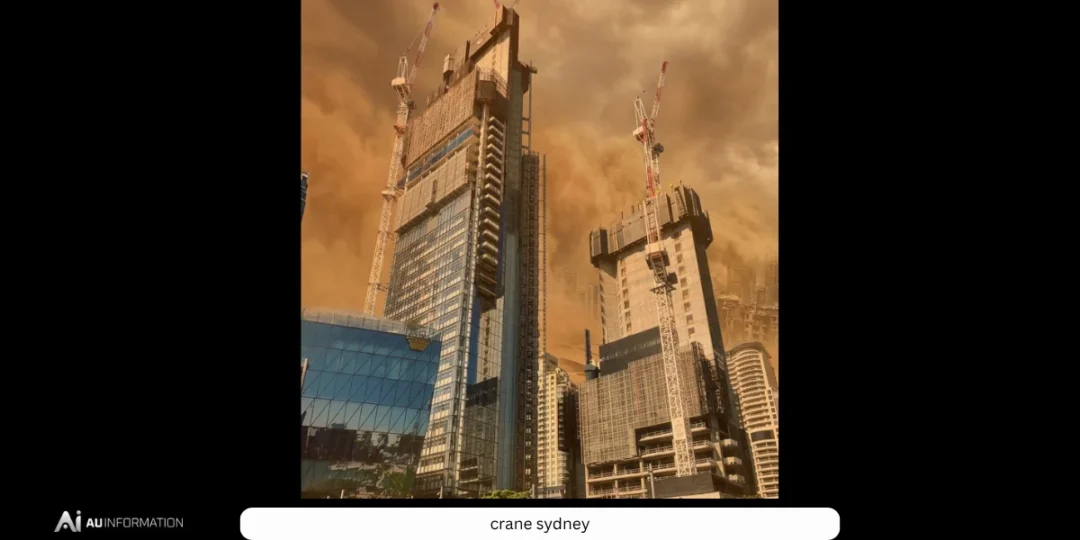
Sydney’s skyline is a powerful reminder of how much modern construction depends on heavy lifting equipment. From high-rise residential towers and commercial developments to major transport infrastructure, cranes are essential for moving steel, concrete, machinery, glass and other materials safely into position.
The term crane Sydney covers a wide range of services and equipment. Depending on the project, contractors may require tower cranes for long-term high-rise construction, mobile cranes for flexible lifting operations, crawler cranes for heavy loads on challenging sites, or specialised equipment for major infrastructure works.
Sydney’s construction market has also produced some remarkable crane operations. The city’s major projects, including Sydney Metro developments, Barangaroo and hospital redevelopments, have pushed lifting technology and engineering capability to increasingly demanding levels.
Understanding the different crane types, hire considerations, costs and safety requirements is therefore important for builders, developers, contractors and property owners planning construction work in Sydney.
Why Cranes Are Essential to Sydney Construction
Sydney presents a particularly demanding construction environment.
Dense urban development, limited construction sites, traffic restrictions and increasingly tall buildings mean contractors often need equipment capable of lifting substantial loads while operating within very restricted spaces.
Cranes perform several critical functions, including:
- Lifting structural steel and reinforcement
- Moving concrete and construction materials
- Installing façade panels and glazing
- Positioning heavy mechanical equipment
- Supporting high-rise residential construction
- Handling infrastructure components
- Moving machinery in industrial environments
- Performing specialised heavy-lift operations
A crane is not simply a piece of machinery selected according to maximum lifting capacity. The correct equipment must match the load, lifting radius, site conditions, height, access requirements and duration of the project.
Main Types of Cranes Available in Sydney
Different construction situations require different crane configurations.
Tower Cranes
Tower cranes are synonymous with Sydney’s high-rise construction sites.
Their vertical mast and long horizontal jib allow them to cover large areas while lifting materials to considerable heights. They are particularly suitable for projects lasting several months or years.
Tower cranes are commonly used for:
- Apartment towers
- Office buildings
- Hospitals
- Hotels
- Major commercial developments
Their major advantage is the combination of height, reach and lifting capacity.
However, installation requires detailed planning, engineering assessment and sufficient site space. Contractors also need to consider oversailing, neighbouring properties, traffic management and the crane’s eventual dismantling.
Mobile Cranes
Mobile cranes are mounted on vehicles or specialised carriers and can generally be transported between locations more easily than tower cranes.
They are useful when contractors need flexibility rather than permanent lifting infrastructure.
Typical applications include:
- Residential construction
- Roof installations
- Equipment placement
- Structural steelwork
- Temporary lifting operations
- Industrial maintenance
The ability to arrive, set up and leave relatively quickly can make mobile cranes particularly useful for short-duration projects.
Crawler Cranes
Crawler cranes operate on tracked undercarriages rather than conventional wheels.
Their tracks distribute weight over a larger area, making them useful for certain heavy-lifting operations and sites where stability and load capacity are particularly important.
They are frequently associated with major infrastructure, industrial and large-scale construction projects.
Specialised Heavy-Lift Cranes
Some projects require equipment far beyond the capabilities of ordinary construction cranes.
Sydney’s major infrastructure projects have demonstrated how specialised crane technology can be used for extraordinary lifts.
One notable example involved Marr Contracting’s M2480D tower crane at Sydney Metro Barangaroo. The crane was used to lift a 255-tonne section of a tunnel-boring machine in a single operation, an achievement described as a world-record tower-crane lift.
Operations of this scale require extensive engineering, load analysis, lifting plans and coordination between multiple specialist teams.
Crane Hire Sydney: What Determines the Cost?
There is no single price for crane hire in Sydney because the cost depends heavily on the equipment and project requirements.
Factors influencing the final price can include:
- Crane type – Mobile, tower, crawler and specialised cranes have very different operating costs.
- Lifting capacity – Larger cranes generally require greater mobilisation and operating resources.
- Hire duration – Short-term and long-term arrangements are priced differently.
- Operator requirements – Qualified operators may be included or charged separately.
- Transport and mobilisation – Moving large equipment to and from a site can be expensive.
- Site preparation – Ground conditions may require additional preparation.
- Traffic management – Urban Sydney projects may require road closures or traffic control.
- Engineering requirements – Complex lifts may require specialised lift plans and engineering supervision.
- After-hours work – Night or restricted-hour operations can increase costs.
For this reason, requesting a crane based only on an advertised hourly rate can be misleading. The true project cost includes mobilisation, setup, labour, permits, engineering and other site requirements.
How to Choose the Right Crane
Choosing the right crane begins with understanding the lift rather than choosing a machine based on size alone.
A contractor should establish:
- The maximum weight of the load
- The required lifting height
- The horizontal lifting radius
- Where the crane can safely stand
- Ground-bearing capacity
- Access restrictions
- Nearby buildings and power lines
- Required lifting frequency
- Project duration
For example, a small residential roof installation may require a mobile crane for only a few hours. A 20-storey apartment development, by contrast, may require a tower crane installed for much of the construction period.
The wrong choice can increase costs, create delays and introduce unnecessary safety risks.
Crane Safety in Sydney
Crane operations are among the most safety-critical activities on a construction site.
A lifting operation involves much more than the crane itself. The load, rigging equipment, ground conditions, weather, workers and surrounding environment all contribute to the risk profile.
Professional crane operations therefore require careful planning and compliance with applicable workplace health and safety requirements.
Important considerations include:
Operator Competency
The person operating the crane must have the appropriate competency and licensing for the equipment and work involved.
Load Assessment
Every lift should account for the weight, dimensions and centre of gravity of the load.
Ground Conditions
A crane can become unstable if the supporting ground cannot safely withstand the imposed loads.
Rigging
Slings, chains, shackles and other lifting accessories must be suitable for the load and correctly inspected and used.
Exclusion Zones
People who are not involved in the lifting operation should be kept away from areas where loads could fall or swing.
Weather
Strong winds and severe weather can affect crane stability and load control, particularly when lifting large or lightweight objects.
Cranes and Sydney’s Major Projects
Cranes have become highly visible symbols of Sydney’s continuing infrastructure development.
The city’s major projects have included large transport developments, hospitals, commercial towers and residential buildings.
The Sydney Metro program has been particularly significant because underground stations and tunnels require sophisticated lifting operations. Barangaroo demonstrated how tower-crane technology can be adapted for exceptionally heavy infrastructure components.
Hospital construction provides another example. The redevelopment of Royal Prince Alfred Hospital has involved major tower-crane operations, including two cranes reaching approximately 65 metres to support construction of a new 15-storey building.
These projects show that cranes are not limited to conventional building construction. They are an integral part of Australia’s infrastructure expansion.
Common Mistakes When Hiring a Crane
One of the most common mistakes is choosing a crane according to maximum lifting capacity without considering the lifting radius.
A crane capable of lifting 20 tonnes close to its mast may have a substantially lower safe capacity at a long radius.
Other mistakes include:
- Failing to assess site access
- Underestimating mobilisation costs
- Ignoring ground conditions
- Not allowing enough setup space
- Forgetting traffic-management requirements
- Using unsuitable lifting accessories
- Treating engineering requirements as an afterthought
- Choosing the cheapest quote without comparing what is included
A professional crane-hire assessment should consider the entire lifting operation rather than the machine alone.
The Future of Crane Technology
Sydney’s construction industry is becoming increasingly sophisticated, and crane technology is evolving alongside it.
Future developments are likely to involve greater use of:
- Remote monitoring
- Digital load-management systems
- Improved safety sensors
- Telematics
- Automated planning
- Better anti-collision technology
- More efficient electric and hybrid equipment
Data-driven construction management may also improve how contractors schedule crane movements and coordinate lifting operations with other trades.
At the same time, Sydney’s constrained urban environment will continue to create demand for cranes capable of performing increasingly complex lifts within small and highly controlled sites.
Final Thoughts
The story of crane Sydney is ultimately the story of modern construction itself. Behind every major tower, hospital, transport project and infrastructure development is a carefully planned chain of lifting operations that allows enormous components to be moved safely into position.
From mobile cranes serving residential builders to massive tower cranes supporting Sydney Metro and high-rise developments, each machine has a specific role.
For anyone planning a lifting project, the most important lesson is straightforward: choose the crane according to the complete lifting operation, not simply the headline capacity or cheapest hire price.
Proper engineering, qualified personnel, site assessment and disciplined safety procedures are what turn powerful lifting equipment into an effective construction tool. As Sydney continues to grow and its projects become more technically demanding, cranes will remain one of the most important pieces of equipment shaping the city’s physical future.




No Comments