
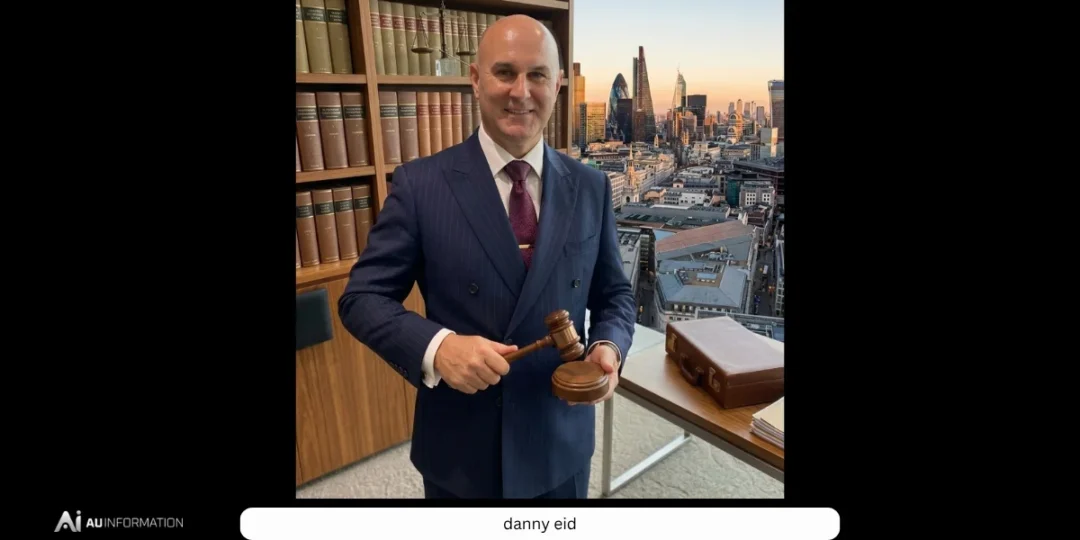
Danny Eid is an Australian criminal lawyer and courtroom advocate whose career has brought him into some of New South Wales’ most closely followed legal matters. Based in NSW, Eid is the principal of Danny Eid Lawyers, where his practice extends across criminal defence, traffic matters, domestic-violence cases, coronial proceedings and selected areas of succession law.
For a lawyer working in criminal and public-interest litigation, reputation is built less through publicity than through preparation, advocacy and the ability to handle complicated evidence under pressure. Eid’s professional profile reflects that combination. His involvement in significant Australian legal proceedings, including matters connected with the Craig Folbigg case, has placed him within a legal landscape where factual detail, expert evidence and procedural fairness can have enormous consequences.
His career is therefore worth examining not simply because of the cases associated with his name, but because it illustrates the demanding role of a criminal defence lawyer in Australia’s court system.
Who Is Danny Eid?
Danny Eid is a New South Wales-based lawyer and advocate who leads Danny Eid Lawyers.
His firm’s stated areas of practice include:
- Criminal law and criminal defence
- Traffic offences
- Domestic and family-violence matters
- Coronial inquests
- Wills and probate
- Contested estates
The breadth of these practice areas reflects the different types of legal problems that can intersect with criminal, family and succession proceedings.
Eid’s work is particularly associated with courtroom advocacy. In complex cases, the lawyer’s role goes beyond presenting arguments. It involves reviewing evidence, identifying inconsistencies, questioning witnesses, understanding expert reports and developing a coherent legal strategy.
That preparation can become particularly important when a case receives significant media attention.
A Career Focused on Courtroom Advocacy
Criminal defence is one of the most demanding areas of legal practice because the consequences of a case can be profound.
A criminal lawyer may need to deal with police evidence, forensic material, witness statements, expert testimony and competing interpretations of events. At the same time, the lawyer must protect the accused person’s legal rights and ensure the prosecution is required to establish its case according to the applicable standard of proof.
Eid’s professional profile emphasises detailed preparation and advocacy.
This approach is particularly relevant in serious criminal proceedings, where seemingly small details can become important during cross-examination or legal argument.
An effective defence strategy can involve several stages:
- Reviewing the evidence – identifying what is established and what remains disputed.
- Testing the prosecution case – examining whether evidence is reliable and admissible.
- Investigating alternative explanations – considering evidence that may support the defence.
- Preparing witnesses and arguments – ensuring the case is presented clearly and logically.
- Advocating in court – responding to developments as the hearing progresses.
These fundamentals are common throughout criminal litigation, regardless of how prominent the case becomes.
Danny Eid and the Craig Folbigg Case
One of the most notable matters associated with Danny Eid is his representation of Craig Folbigg, the former husband of Kathleen Folbigg.
The Folbigg case became one of Australia’s most significant wrongful-conviction controversies. Kathleen Folbigg had been convicted of killing her four children, but subsequent scientific evidence and renewed examination of the circumstances surrounding the children’s deaths dramatically changed the public and legal understanding of the case.
Craig Folbigg was himself an important figure in the wider legal story.
Eid’s involvement illustrates the complexity of cases in which criminal convictions intersect with medical evidence, scientific research, family relationships and coronial questions.
Such matters are exceptionally challenging for lawyers because evidence can extend well beyond conventional courtroom testimony. Medical and genetic evidence, historical records and expert opinions may all become relevant.
The broader Folbigg proceedings ultimately demonstrated why criminal cases can require continual examination when significant new evidence emerges.
It is important, however, to distinguish between a lawyer’s representation of a client and the factual findings ultimately made by courts or other authorities. Legal representation does not itself establish the truth of allegations or disputed claims.
Other High-Profile Legal Matters
Eid has also appeared in other significant Australian legal proceedings involving public-interest issues, political matters and investigations.
High-profile cases create a particular challenge for defence lawyers. Media coverage can create public assumptions about a case before all evidence has been tested in court.
A lawyer’s responsibility remains fundamentally legal rather than public-relations driven.
That means concentrating on:
- Evidence rather than speculation
- Legal procedure rather than headlines
- The client’s rights rather than public opinion
- The applicable law rather than social-media commentary
This distinction is especially important in cases involving public figures.
Why Criminal Defence Lawyers Matter
The work of a criminal defence lawyer is sometimes misunderstood.
Defending someone accused of an offence does not mean endorsing the alleged conduct. The fundamental principle is that a person facing criminal proceedings is entitled to legal representation and a fair hearing.
The defence lawyer’s job is to ensure that the prosecution’s case is properly tested and that the client’s legal interests are protected.
In practical terms, that can involve challenging:
- The reliability of witnesses
- The interpretation of evidence
- Police procedures
- Expert conclusions
- The admissibility of evidence
- The legal elements of an alleged offence
This adversarial process is a central feature of the justice system.
Coronial Matters and Complex Investigations
Another interesting element of Eid’s professional practice is his involvement in coronial inquests.
Coronial proceedings differ from ordinary criminal trials. Their purpose can include determining the identity of a deceased person, the circumstances of death and, depending on the jurisdiction and circumstances, making recommendations aimed at preventing similar deaths.
Lawyers involved in coronial matters may examine medical evidence, witness accounts, police investigations and expert reports.
This requires a different style of preparation from routine criminal litigation, particularly when the evidence is incomplete or contested.
Eid’s involvement across both criminal and coronial work gives his professional profile a broader dimension than that of a lawyer focused exclusively on conventional criminal charges.
The Importance of Preparation in Serious Cases
One of the most transferable lessons from high-profile litigation is the importance of preparation.
A strong courtroom performance usually begins long before the lawyer enters the courtroom.
For a complex matter, preparation can include:
Building a detailed chronology
A clear timeline can expose contradictions and identify gaps in evidence.
Separating facts from assumptions
Lawyers must distinguish what a witness actually observed from what the witness believes happened.
Testing expert evidence
Scientific or technical evidence should not automatically be treated as conclusive. Its methodology, assumptions and limitations may need examination.
Anticipating the opposing case
A defence lawyer needs to understand not only the client’s position but also the strongest arguments likely to be advanced by the prosecution or opposing party.
Maintaining procedural discipline
Even compelling factual arguments can fail if legal procedures and evidentiary rules are overlooked.
Common Misconceptions About High-Profile Lawyers
Public interest can create several misconceptions about lawyers such as Eid.
First, media visibility does not necessarily reflect the full extent of a lawyer’s practice. A lawyer may receive attention because of one prominent case while handling many ordinary matters privately.
Second, representing a controversial client does not mean agreeing with that client’s conduct. Defence lawyers have professional duties to their clients and to the court.
Third, winning a case is not the only measure of effective legal representation. Negotiating appropriate outcomes, protecting procedural rights and ensuring evidence is properly tested can all be important achievements.
These distinctions are essential when assessing any lawyer through media reports alone.
What Clients Should Look For in a Criminal Lawyer
Anyone facing criminal proceedings should approach the selection of legal representation carefully.
Useful questions include:
- Does the lawyer have experience with the relevant type of offence?
- Who will actually appear in court?
- How clearly does the lawyer explain the available options?
- What evidence needs to be examined?
- What are the likely procedural stages?
- What are the legal fees and billing arrangements?
- Does the lawyer understand the relevant NSW court and procedural requirements?
Clients should also avoid choosing a lawyer solely because the person has represented a famous client.
Experience matters, but so do communication, preparation, strategy and the lawyer’s understanding of the specific case.
Danny Eid’s Place in Australian Legal Practice
Danny Eid’s career demonstrates how criminal defence can intersect with some of Australia’s most closely scrutinised legal controversies.
His work across criminal defence, traffic law, domestic-violence matters, coronial proceedings and succession disputes gives his practice a broad legal foundation, while his involvement in high-profile matters has brought additional public attention.
The Craig Folbigg proceedings are particularly significant because they demonstrate how criminal and coronial questions can evolve as scientific and evidentiary understanding changes.
For lawyers working in this environment, careful analysis is indispensable. A case can involve not only legal rules but also medicine, forensic science, policing, family history and complex factual disputes.
Future Outlook
The future of criminal litigation in Australia will increasingly involve sophisticated digital and scientific evidence.
Electronic communications, mobile-phone records, surveillance footage, forensic technologies and expert analysis can all influence modern investigations.
At the same time, public access to information through social media creates additional challenges. Lawyers must navigate cases in which public opinion can develop rapidly while formal proceedings are still underway.
For advocates such as Eid, this makes traditional legal skills—careful preparation, evidence analysis, cross-examination and persuasive courtroom advocacy—more important, not less.
Conclusion
Danny Eid has established a profile within Australian legal practice through his work as a criminal lawyer and advocate in New South Wales. His practice encompasses serious criminal matters alongside traffic law, domestic-violence proceedings, coronial work and succession-related disputes.
His involvement in the Craig Folbigg matter stands out because of the case’s extraordinary legal and scientific complexity, while his wider courtroom work demonstrates the broader responsibilities involved in criminal defence.
Ultimately, the significance of a criminal lawyer’s role is not determined by the headlines surrounding a case. It lies in the careful examination of evidence, protection of legal rights and presentation of arguments within the justice system.
For anyone interested in Australian law, Danny Eid’s career offers a useful window into that demanding world—where preparation, advocacy and evidence can shape the outcome of cases with consequences extending far beyond the courtroom.




No Comments