
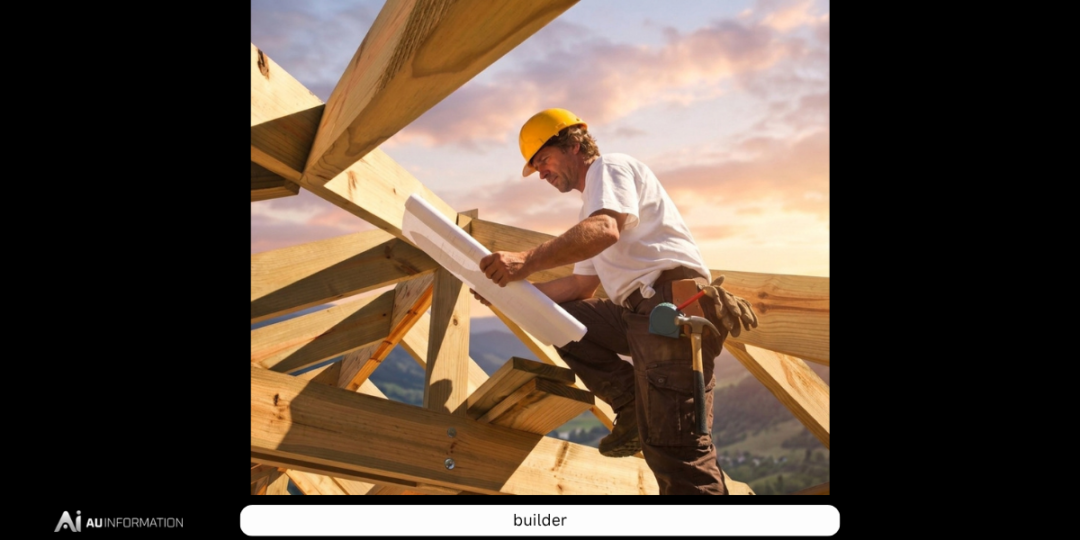
Builders are among the most important forces shaping the modern world. From skyscrapers and residential communities to highways, airports, railways, power plants and entire new cities, the construction industry provides the physical infrastructure on which economies depend.
Yet the word builder covers a remarkably broad industry. It can refer to a local company constructing family homes, a multinational contractor delivering a billion-dollar railway, or a specialist engineering group responsible for complex energy and infrastructure projects.
In 2026, the global construction sector is becoming increasingly international, technologically advanced and capital intensive. According to current industry rankings, companies headquartered in China dominate the upper end of the global contracting market, while European, American and Middle Eastern firms remain major forces across infrastructure, commercial development and residential construction.
ENR’s 2026 ranking illustrates the scale of the industry: the world’s top 250 international contractors generated approximately $550.6 billion in international construction revenue, representing a 9.7% increase from the previous year.
What Does a Builder Actually Do?
At its simplest, a builder turns architectural and engineering plans into physical structures.
However, modern builders can be responsible for far more than physical construction.
Depending on the company and project, responsibilities may include:
- Site preparation and excavation
- Structural construction
- Electrical and mechanical installation
- Plumbing and utilities
- Road and railway construction
- Project management
- Procurement and supply-chain management
- Safety and environmental compliance
- Building renovation and maintenance
- Residential development
- Infrastructure financing and delivery
The largest construction companies often operate as integrated engineering and project-management organisations rather than traditional building contractors.
The World’s Largest Construction Companies
Global rankings consistently feature several enormous contractors with operations spanning multiple continents.
China State Construction Engineering
China State Construction Engineering (CSCEC) is one of the world’s largest construction groups and has become synonymous with China’s enormous infrastructure and property-development industry.
Its activities extend across:
- Buildings
- Transport infrastructure
- Industrial projects
- Housing
- Engineering
- International construction
The scale of CSCEC reflects China’s broader investment in urbanisation and infrastructure.
China Railway Group
China Railway Group is another giant of the global construction industry.
As its name suggests, railway infrastructure is central to its expertise, but the company’s operations extend into highways, bridges, tunnels, urban development and other major infrastructure projects.
Its capabilities are particularly relevant in an era when governments worldwide are investing in high-speed rail and mass-transit systems.
China Railway Construction Corporation
China Railway Construction Corporation is another major Chinese contractor with extensive international experience.
Its portfolio includes complex transportation and infrastructure projects, demonstrating how modern construction companies increasingly combine civil engineering, project management and specialised technical expertise.
China Communications Construction Company
China Communications Construction Company has significant expertise in ports, roads, bridges, dredging and marine infrastructure.
This makes it particularly important to the global logistics economy because modern trade depends heavily on ports and transportation networks.
European Construction Giants
Europe remains home to several globally important builders.
VINCI
France-based VINCI is one of Europe’s most prominent construction and infrastructure groups.
Its activities extend beyond conventional building into concessions, transport infrastructure and complex engineering.
One of VINCI’s strengths is its diversified business model, which allows the company to participate in infrastructure throughout a project’s lifecycle.
ACS and HOCHTIEF
Spain’s ACS Group and Germany-based HOCHTIEF are also major players in international construction.
Their expertise spans:
- Transport infrastructure
- Buildings
- Energy
- Industrial facilities
- Mining infrastructure
- Engineering
Their international operations demonstrate how European construction companies compete successfully in technically demanding global markets.
Power Construction Corporation of China
PowerChina is another major international contractor, particularly in energy and infrastructure.
Its capabilities include hydropower, renewable energy, electricity infrastructure and major civil-engineering projects.
As governments accelerate investment in renewable energy and electricity networks, companies with these capabilities are positioned to remain highly relevant.
America’s Biggest Home Builders
Large construction contractors and residential builders should not be confused.
A company building highways and airports operates very differently from a company constructing thousands of homes.
The United States has one of the world’s most developed large-scale residential building industries.
Major US home builders include:
- D.R. Horton
- Lennar
- PulteGroup
- NVR
- Meritage Homes
- Taylor Morrison
- KB Home
- Toll Brothers
D.R. Horton
D.R. Horton has maintained its position as America’s leading home builder by annual housing closings for more than two decades.
Its scale comes from operating across numerous US housing markets and focusing heavily on mainstream residential demand.
Lennar
Lennar has consistently ranked among America’s largest residential builders.
Its business covers a broad range of housing markets and price segments, making it an important indicator of trends in US residential construction.
PulteGroup
PulteGroup is another major American home-building company with brands and communities serving different segments of the housing market.
Its position illustrates the importance of large-scale residential development in addressing America’s continuing housing demand.
What Makes a World-Class Builder?
Size alone does not determine whether a construction company is successful.
The strongest builders typically combine several capabilities.
Financial Strength
Large infrastructure projects can take years to complete and require enormous amounts of capital.
Financial stability allows contractors to withstand cost fluctuations, delays and economic uncertainty.
Engineering Expertise
Modern construction increasingly involves sophisticated structural, mechanical and digital engineering.
A major contractor needs technical expertise as well as traditional construction knowledge.
Supply-Chain Management
Materials such as steel, concrete, glass and electrical equipment can represent substantial portions of project costs.
Efficient procurement and logistics can therefore have a major impact on profitability.
Safety
Construction remains a physically demanding industry.
Strong companies place safety management at the centre of project planning rather than treating it as an administrative requirement.
Technology
Digital transformation is rapidly changing construction.
Builders are increasingly using:
- Building Information Modelling
- Artificial intelligence
- Drones
- Digital twins
- Automated equipment
- Robotics
- Construction-management software
- Advanced surveying systems
Technology can improve planning, reduce errors and provide better visibility over complex projects.
The Rise of Sustainable Construction
Environmental performance is becoming another defining characteristic of modern construction.
Buildings consume significant amounts of energy and materials, while infrastructure projects can have substantial environmental impacts.
As a result, builders are increasingly focused on:
- Energy-efficient buildings
- Low-carbon concrete
- Recycled construction materials
- Renewable energy integration
- Water efficiency
- Passive building design
- Sustainable transport infrastructure
- Waste reduction
The transition toward lower-carbon construction will require significant innovation from both builders and material suppliers.
Common Mistakes When Choosing a Builder
For homeowners or developers, selecting a builder purely on price can be a costly mistake.
A very low initial quote may exclude important work or underestimate the true project requirements.
Before choosing a builder, consider:
- Experience — Has the company completed similar projects?
- Licensing — Does it have the appropriate licences and registrations?
- Insurance — Is adequate construction insurance in place?
- References — Can previous clients verify the company’s work?
- Contract clarity — Are inclusions, exclusions and variations clearly defined?
- Timeline — Is the proposed schedule realistic?
- Financial stability — Can the builder complete the project without financial distress?
A reputable builder should be willing to explain these matters clearly.
How Technology Will Change Construction
The next decade could bring some of the industry’s most significant technological changes.
Artificial intelligence can already assist with estimating, scheduling, document analysis and risk identification.
Robotics and automated machinery could eventually reduce the amount of repetitive manual work required on major construction sites.
Digital twins may also allow developers and operators to simulate buildings and infrastructure before and after construction.
The most important development, however, may be the integration of these technologies rather than any single innovation.
The Future of Global Builders
Construction demand is unlikely to disappear. Population growth, urbanisation, housing shortages, infrastructure renewal and energy transition will continue creating enormous requirements for new physical assets.
Several areas are likely to be particularly important:
Housing: Many countries face shortages of affordable homes.
Transport: Railways, roads, airports and public transit require continued investment.
Energy: Renewable generation, transmission networks and storage infrastructure are expanding.
Data centres: AI and cloud computing are driving substantial demand for specialised digital infrastructure.
Industrial facilities: Semiconductor plants, advanced manufacturing facilities and logistics centres require increasingly sophisticated construction.
Climate resilience: Flood protection, water infrastructure and resilient buildings will become increasingly important as governments adapt to environmental risks.
Conclusion
The world’s builders are no longer simply companies that put bricks, concrete and steel together. The largest construction groups have evolved into sophisticated engineering, technology, infrastructure and project-management organisations capable of delivering projects on a scale that can transform entire regions.
Companies such as China State Construction Engineering, China Railway Group, China Railway Construction, China Communications Construction, VINCI, PowerChina and ACS/HOCHTIEF demonstrate the enormous scale of modern international contracting.
At the residential level, companies such as D.R. Horton, Lennar, PulteGroup and NVR demonstrate another side of the industry: the ability to construct thousands of homes efficiently while responding to changing consumer demand.
Looking ahead, the most successful builders will likely be those that combine engineering excellence, financial discipline, digital technology, sustainability and skilled people.
The physical cities and infrastructure of the future are being shaped today—and the world’s leading builders will be among the organisations responsible for turning those plans into reality.




No Comments