
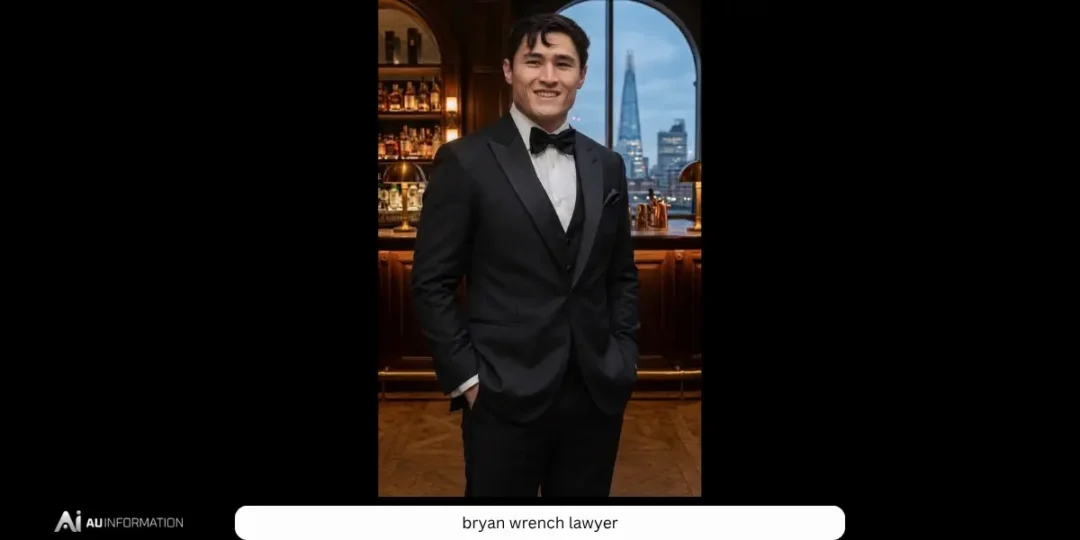
In Australian criminal law, few lawyers attract as much public attention as Bryan Wrench, a Sydney-based criminal defence solicitor whose career has increasingly placed him in some of the country’s most closely followed legal proceedings.
Wrench is the managing lawyer at Murphy’s Lawyers and specialises in criminal and traffic law. Admitted to practise in New South Wales in 2011, he has built a reputation not only through conventional criminal defence work but also through representing prominent Australians, including entertainers, professional athletes and public figures.
His profile has grown considerably because of the cases he handles. Among the people he has represented are actor John Jarratt, singer Shannon Noll, rugby league player Sam Burgess and activist Danny Lim. More recently, his representation of former broadcaster Alan Jones has put his courtroom arguments under particularly intense media scrutiny.
Understanding Bryan Wrench’s career requires looking beyond the headlines. Criminal defence is fundamentally about testing evidence, protecting procedural rights and ensuring that allegations are properly examined in court.
Who Is Bryan Wrench?
Bryan Wrench is an Australian criminal defence lawyer based in Sydney, New South Wales.
He was admitted to legal practice in NSW in 2011 and developed his professional practice around criminal and traffic law.
His work encompasses matters that can range from relatively routine criminal and traffic proceedings to serious allegations requiring extensive preparation and courtroom advocacy.
His professional profile has been strengthened by representing clients whose cases attract significant public attention.
That creates an unusual challenge for a criminal lawyer: the legal proceedings must be conducted according to established rules even when the surrounding media coverage is intense.
Bryan Wrench and Murphy’s Lawyers
Wrench is the managing lawyer at Murphy’s Lawyers, where criminal defence forms an important part of his professional practice.
A criminal defence practice typically requires lawyers to deal with several stages of a case, including:
- Initial legal advice
- Bail applications
- Police investigations
- Evidence assessment
- Negotiations with prosecutors
- Committal and procedural hearings
- Trial preparation
- Sentencing
- Appeals
The work requires more than courtroom confidence. Lawyers must examine evidence carefully, identify weaknesses and understand how individual pieces of evidence fit into the prosecution’s overall case.
For a high-profile client, lawyers must also manage the additional pressure created by journalists, public commentary and social media.
High-Profile Clients
Wrench has represented several Australians whose legal matters attracted substantial media attention.
His reported clients have included:
- John Jarratt, the Australian actor
- Shannon Noll, the Australian singer
- Sam Burgess, the former professional rugby league player
- Danny Lim, the Sydney-based activist
- Alan Jones, the former radio broadcaster
The cases differ considerably in their facts and legal circumstances. What connects them is the level of public interest surrounding the individuals involved.
It is important, however, to distinguish between representing a person and endorsing that person’s conduct. A defence lawyer’s role is to represent the client’s legal interests and test the prosecution’s case.
The Alan Jones Case
One of the most prominent recent matters associated with Bryan Wrench is his representation of Alan Jones.
Jones, the former Australian radio broadcaster, has faced historical sexual-assault-related charges, which he denies. Because these are allegations being dealt with through the legal system, they should not be treated as established facts unless and until determined by a court.
Wrench has publicly challenged aspects of the prosecution case and questioned alleged inconsistencies in evidence. His approach illustrates one of the fundamental responsibilities of criminal defence lawyers: examining whether the prosecution has produced reliable and legally sufficient evidence.
In a criminal proceeding, the defence does not have to prove that the accused is innocent. The prosecution bears the burden of proving the charges according to the applicable legal standard.
That distinction is central to understanding criminal trials.
Why Evidence Contradictions Matter
When a defence lawyer identifies contradictions in evidence, the purpose is not necessarily to establish an alternative version of events immediately.
Instead, contradictions can affect questions such as:
- How reliable is a witness?
- Are different accounts consistent?
- Was evidence collected correctly?
- Could a particular event have occurred as alleged?
- Are there gaps in the investigation?
- Does the available evidence support every element of the charge?
A skilled defence lawyer therefore examines both individual pieces of evidence and the broader narrative constructed by the prosecution.
This is especially important in cases involving historical allegations, where memories, documents and other forms of evidence may be examined many years after the alleged events.
The Role of a Criminal Defence Lawyer
The public sometimes misunderstands what criminal defence lawyers actually do.
Their responsibility is not to determine whether a client is morally good or bad. Their professional role is to ensure that the legal process is fair and that the prosecution is required to establish its case.
A defence lawyer may:
- Examine the prosecution’s evidence.
- Identify inconsistencies or weaknesses.
- Challenge inadmissible evidence.
- Cross-examine witnesses.
- Present evidence supporting the defence case.
- Negotiate where appropriate.
- Advise the client about legal risks.
- Make submissions to the court.
These responsibilities are fundamental to the adversarial criminal justice system.
Representing Clients Under Media Pressure
High-profile criminal proceedings create a second courtroom outside the courthouse: the media.
When a client is a celebrity, athlete or prominent public figure, almost every procedural development can generate headlines.
For a defence lawyer, this creates several competing priorities.
The first is protecting the client’s legal interests.
The second is avoiding unnecessary public commentary that could complicate the proceedings.
The third is correcting significant misunderstandings where appropriate.
The fourth is ensuring that legal arguments are ultimately made in the proper forum—the court.
This is particularly important because public opinion and legal findings are not the same thing.
A person can face serious allegations without having been convicted, while a lawyer’s criticism of evidence should not automatically be interpreted as proof that the defence version will succeed.
What Makes High-Profile Defence Work Difficult?
Representing a well-known client can provide professional visibility, but it also creates substantial pressure.
A lawyer may have to work with:
- Large volumes of evidence
- Multiple witnesses
- Complex procedural issues
- Intensive media coverage
- Public criticism
- Tight court deadlines
- Highly sensitive client information
The lawyer must remain focused on the legal issues rather than allowing public commentary to determine strategy.
That requires preparation, discipline and a detailed understanding of the evidence.
Common Misconceptions About Criminal Defence
There are several common mistakes people make when discussing lawyers such as Bryan Wrench.
Mistake 1: Assuming Representation Means Agreement
A lawyer represents a client; that does not mean the lawyer personally agrees with every allegation, action or statement associated with that client.
Mistake 2: Treating Allegations as Convictions
An allegation is not equivalent to a court finding. This distinction is essential in responsible reporting.
Mistake 3: Judging a Case From Headlines
News reports may describe only selected aspects of a proceeding. Court cases can involve extensive evidence and procedural arguments that are not captured in a short article.
Mistake 4: Assuming Every Case Goes to Trial
Some criminal matters conclude through pleas, withdrawals, dismissals, negotiated outcomes or other procedural pathways.
Why Bryan Wrench’s Career Attracts Attention
Wrench’s profile reflects a broader phenomenon within modern Australian law: criminal lawyers representing public figures can themselves become public figures.
His work sits at the intersection of law, media and Australian popular culture.
Representing celebrities and prominent Australians means that his legal arguments can become part of the public conversation. Yet the underlying professional principles remain the same whether a client is famous or unknown.
Evidence must be tested. Legal procedures must be followed. The prosecution must establish its case. And the accused is entitled to legal representation.
The Future of His Legal Career
As Wrench continues practising criminal law, his profile is likely to remain connected to significant Australian legal proceedings.
His future reputation will ultimately depend less on individual headlines than on the quality and consistency of his legal work.
For lawyers operating in high-profile criminal defence, long-term professional credibility generally rests on several foundations:
- Strong preparation
- Detailed evidence analysis
- Effective advocacy
- Ethical professional conduct
- Clear communication
- Understanding of criminal procedure
- The ability to remain composed under pressure
These qualities matter regardless of whether a case attracts national headlines.
Conclusion
Bryan Wrench has established himself as a prominent Sydney criminal defence lawyer, combining a specialist criminal-law practice with representation of several high-profile Australians.
His role as managing lawyer at Murphy’s Lawyers and his involvement in major media-covered cases have made him a recognisable figure within Australia’s legal landscape. His representation of Alan Jones has brought particular attention to his approach to evidence and courtroom advocacy, while his earlier work with other public figures has contributed to his broader reputation.
Ultimately, the most important aspect of criminal defence is not the celebrity of the client or the intensity of media coverage. It is the integrity of the legal process.
For Bryan Wrench, as for any criminal defence lawyer, the central professional task remains the same: test the evidence, protect the client’s legal rights and ensure that allegations are determined through the courts rather than by public opinion.




No Comments