
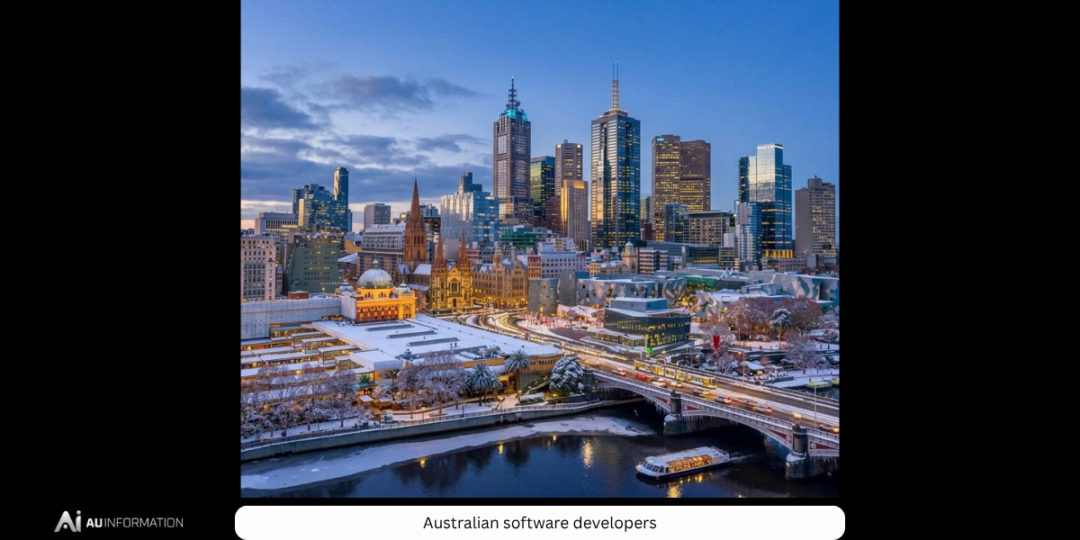
Melbourne’s technology sector has developed into one of Australia’s most sophisticated and diverse innovation ecosystems. Once best known internationally for finance, education, culture and professional services, the Victorian capital is now also recognised as a major centre for artificial intelligence, fintech, healthtech, cybersecurity, software, digital games and deep technology.
The scale of the ecosystem is substantial. Melbourne is home to more than 25,000 technology businesses and more than 300,000 ICT professionals, while Victoria generates over A$142 billion in digital-technology revenue and approximately A$3 billion in annual technology exports. More than half of Australia’s top 20 technology companies are also based in Melbourne, strengthening the connection between established businesses, ambitious startups and research institutions.
Yet the most important development in 2026 is not simply the number of technology companies. It is the increasing concentration of AI and deep-tech innovation.
With 188 AI companies operating in Melbourne’s CBD and Victoria accounting for more than 20% of Australia’s AI startups and scaleups, the city is positioning itself for the next phase of Australia’s technology economy.
Why Melbourne Has Become a Major Technology Hub
Melbourne benefits from a combination of factors that few Australian cities can match.
Its technology ecosystem is supported by:
- A large and highly educated workforce
- Major universities and research institutions
- Strong financial and professional-services industries
- A mature startup community
- Government investment in innovation
- Established technology companies
- Growing venture-capital activity
- Strong international connections
This creates an environment in which startups can develop alongside large corporations and research organisations.
The city’s universities are particularly important for deep technology, artificial intelligence, engineering and medical research. These institutions provide both talent and research that can eventually become commercial products.
Artificial Intelligence Is Reshaping Melbourne’s Tech Scene
AI has rapidly moved from a specialised technology field into a central part of Melbourne’s innovation economy.
The city now has a growing community of businesses working on areas such as:
- Generative AI
- Machine learning
- Computer vision
- AI-powered healthcare
- Enterprise automation
- AI infrastructure
- Data analytics
- AI governance
- Intelligent software
The concentration of AI companies in Melbourne’s CBD demonstrates how quickly the ecosystem has developed.
More importantly, AI is becoming integrated with other technology sectors rather than existing independently.
A healthtech company may use machine learning to analyse medical information. A fintech startup can use AI for fraud detection. A cybersecurity company can use AI to identify suspicious behaviour. An enterprise software business can incorporate generative AI into everyday workplace tools.
This convergence is likely to become one of Melbourne’s biggest competitive advantages.
Victoria’s Growing Deep-Tech Ambition
Artificial intelligence is only part of Melbourne’s technology story.
Victoria is also developing a stronger deep-tech ecosystem involving advanced research and technically complex products.
Deep tech generally requires greater scientific expertise, longer development periods and larger amounts of capital than conventional software startups.
Melbourne’s strengths include areas such as:
- Advanced computing
- Biotechnology
- Medical technology
- Quantum technologies
- Advanced manufacturing
- Artificial intelligence
- Robotics
In June 2026, the Victorian Government announced A$3.5 million for nine pre-accelerator programs designed to help emerging AI and deep-tech startups develop products, attract customers and become investment-ready.
This kind of support can be particularly valuable because early-stage deep-tech businesses often face a difficult transition from laboratory research to commercialisation.
Melbourne’s Startup Economy Is Expanding
Melbourne’s startup sector is becoming increasingly significant to the broader Victorian economy.
Victorian startups raised approximately A$2.4 billion in 2025, while more than 68,000 people now work in startups across the state.
The ecosystem includes companies operating in:
Fintech
Melbourne has developed a strong fintech community, supported by Australia’s sophisticated banking and financial-services industry.
Startups are building products involving payments, financial management, lending, wealth technology and business finance.
Healthtech
The city’s medical research capabilities provide a strong foundation for health technology.
Companies can draw upon hospitals, universities, researchers and healthcare professionals to develop new digital health products and medical technologies.
Enterprise Software
Melbourne is home to successful software companies serving businesses around Australia and international markets.
The city’s strong professional-services sector provides a substantial customer base for these businesses.
Digital Games
Melbourne has also established itself as an important Australian centre for game development and interactive entertainment.
This sector combines creative industries with sophisticated software engineering, design and digital production.
Airwallex and Culture Amp Represent Melbourne’s Global Ambition
Melbourne’s technology success is not limited to companies serving the domestic market.
Businesses such as Airwallex and Culture Amp demonstrate the potential for Melbourne-founded companies to develop international customer bases.
Airwallex has become a major global financial-technology company, while Culture Amp has built a significant international presence in employee experience and workplace technology.
These businesses illustrate an important characteristic of Melbourne’s startup economy: successful companies increasingly need to think globally from an early stage.
Australia’s domestic market is relatively small compared with the United States, Europe or major Asian economies. Melbourne startups seeking substantial scale therefore often need international customers, investment and partnerships.
Technology Jobs in Melbourne
The growth of AI, cloud computing, software and cybersecurity is creating demand for specialised technology workers.
Some of the strongest opportunities are emerging in:
- AI and machine learning
- Software engineering
- Data science
- Cybersecurity
- Cloud engineering
- DevOps
- Product management
- Health technology
- AI governance
- Deep-tech research
However, Melbourne’s technology labour market is becoming increasingly skills-focused.
Employers are looking beyond generic technology knowledge and seeking people who can solve specific commercial or technical problems.
For example, a company developing an AI healthcare product may need someone who understands machine learning and healthcare data requirements.
A fintech may want a software engineer who understands financial regulation.
A cybersecurity company may value someone with both technical security expertise and knowledge of critical infrastructure.
This combination of technology and industry expertise can make professionals particularly valuable.
The Role of Venture Capital
Capital remains essential to Melbourne’s startup ecosystem.
Technology companies often require significant investment before they become profitable, particularly when developing complex products or entering international markets.
Investors are increasingly interested in AI and deep tech, but funding is becoming more selective.
A strong startup generally needs more than an impressive idea. Investors increasingly examine:
- Revenue
- Customer growth
- Market size
- Product differentiation
- Intellectual property
- Unit economics
- Founder experience
- International expansion potential
For Melbourne founders, this means building a commercially credible company is just as important as developing impressive technology.
Government Support Is Strengthening the Ecosystem
Government policy is becoming an increasingly important part of Victoria’s technology strategy.
Programs supporting AI and deep-tech startups can help address a common problem: promising businesses often struggle to move from research and prototypes to commercial products.
Pre-accelerator programs can provide founders with:
- Business mentoring
- Product development guidance
- Customer discovery
- Investor preparation
- Industry connections
- Commercialisation support
The objective is not simply to create more startups. It is to help promising companies become sustainable businesses capable of creating jobs and exporting technology.
Melbourne and the Future of AI Infrastructure
The growth of AI is also creating demand for physical infrastructure.
AI applications require significant computing power, data storage, networking and energy.
As a result, data centres and digital infrastructure are becoming increasingly important to Melbourne’s technology economy.
This creates opportunities beyond traditional software development.
Infrastructure engineers, cloud specialists, energy experts, cybersecurity professionals and data-centre operators will all become increasingly important as AI adoption expands.
The challenge will be balancing rapid digital growth with energy availability, sustainability, network capacity and responsible infrastructure planning.
Common Challenges Facing Melbourne’s Tech Sector
Despite its impressive growth, Melbourne’s technology ecosystem faces several challenges.
Access to Capital
Australian startups can find it harder to secure the scale of funding available to companies in major global technology centres.
International Competition
Melbourne companies compete for customers and talent against businesses from Silicon Valley, London, Singapore and other global technology hubs.
Talent Shortages
Demand for experienced AI engineers, cybersecurity specialists and senior technology leaders can exceed available supply.
Commercialisation
Australia has excellent research capabilities, but turning research into globally successful companies remains a long-term challenge.
Scaling Globally
Startups must often enter overseas markets relatively early if they want to achieve significant scale.
Expert Tips for Building a Tech Career in Melbourne
Professionals looking to enter Melbourne’s technology sector should avoid trying to learn every emerging technology.
Instead, develop a strong foundation and specialise.
A practical strategy is to:
- Build strong technical fundamentals
- Develop expertise in one high-demand field
- Learn how AI applies to that field
- Create practical portfolio projects
- Understand cybersecurity principles
- Improve communication and business skills
- Follow Melbourne’s startup ecosystem
- Network with founders and technology professionals
- Seek internships or industry placements
- Continue learning as technology changes
The strongest technology professionals are often those who combine technical competence with an understanding of business problems.
What Comes Next for Melbourne’s Technology Industry?
The next stage of Melbourne’s technology development is likely to be defined by convergence.
AI will increasingly become part of fintech, healthcare, cybersecurity, software and advanced manufacturing rather than remaining a separate industry.
Deep-tech companies could also benefit from greater collaboration between universities, investors, government and established businesses.
Meanwhile, growing AI adoption will create demand for infrastructure, cloud computing, data management and cybersecurity.
This suggests that Melbourne’s technology economy could become broader rather than simply larger.
Conclusion
The Melbourne tech scene in 2026 represents one of Australia’s most promising technology ecosystems.
Its combination of more than 25,000 technology businesses, a workforce exceeding 300,000 ICT professionals, major research institutions and internationally successful startups gives the city a powerful foundation.
AI is now the centre of much of the growth, but Melbourne’s opportunity extends far beyond artificial intelligence. Fintech, healthtech, cybersecurity, software, digital games and deep technology all contribute to a diverse ecosystem.
Government investment, startup funding and growing international interest are helping reinforce that position.
The real test will be whether Melbourne can turn its growing pool of talent and research into more globally competitive companies. If it succeeds, the city will not merely remain one of Australia’s leading technology centres. It could establish itself as one of the Asia-Pacific region’s most important hubs for AI, deep tech and technology entrepreneurship.



No Comments