
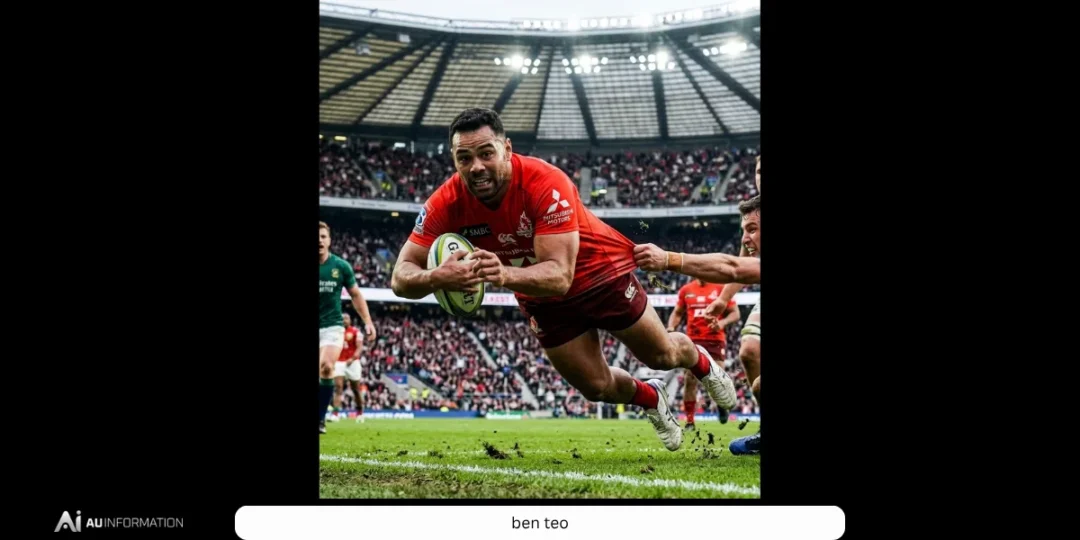
Ben Te’o has built one of the most unusual careers in modern Australian rugby. Born in Auckland, New Zealand, in 1987, he moved to Australia as a teenager and developed into a powerful rugby league forward before successfully crossing codes and becoming an England international and British & Irish Lions player.
His career has now entered another chapter. In 2026, Te’o returned to the spotlight of Queensland rugby league as an assistant coach with the Queensland Maroons under Billy Slater. His appointment came after he left the Brisbane Broncos earlier in the year and represented an opportunity to bring his experience from rugby league, rugby union, and international competition back into the State of Origin environment.
Ben Te’o’s Early Life and Rugby Journey
From New Zealand to Queensland
Ben Te’o was born in Auckland and has Samoan and English heritage. His family moved to Australia when he was 17, and the Gold Coast became an important part of his development.
He attended Keebra Park State High School, an institution with a strong reputation for producing professional rugby league players. It was there that Te’o began building the physical and technical foundations that would eventually take him to the NRL.
His pathway is particularly compelling because he developed in Queensland but was born overseas. That experience later became relevant to his understanding of players who move between countries and sporting systems while pursuing professional careers.
Te’o’s combination of size, aggression, mobility, and ball-carrying ability made him ideally suited to the modern back-row position.
Ben Te’o’s NRL Career
Wests Tigers and Brisbane Broncos
Te’o began his professional rugby league career with the Wests Tigers before moving to the Brisbane Broncos.
At Brisbane, he developed into an important forward and gained experience at the highest level of Australian rugby league. His performances eventually earned him representative recognition.
He went on to play seven matches for Queensland between 2012 and 2014, establishing himself as a respected Maroons forward.
His physical style made him particularly effective in the middle and edges of the field. He was not simply a ball runner; he could provide defensive aggression and create momentum for his team through powerful carries.
Success With South Sydney
Te’o later joined the South Sydney Rabbitohs, where the biggest achievement of his NRL career followed.
In 2014, South Sydney won the NRL premiership, ending one of the most famous championship droughts in Australian sporting history.
Te’o was an important member of that successful team.
The premiership proved significant for his career because it demonstrated his ability to perform in a high-pressure environment. Winning a Grand Final requires more than physical talent. It requires consistency, discipline, and the ability to execute a game plan when the stakes are at their highest.
For Te’o, the 2014 premiership became the platform for the next extraordinary phase of his career.
The Rugby Union Switch
A Major Career Gamble
In 2014, Te’o made the unusual decision to leave rugby league and pursue a career in rugby union.
Such a move is never straightforward. Although the two codes share many characteristics, their tactical structures, rules, positional requirements, and physical demands differ considerably.
Te’o joined Leinster, one of Europe’s most successful rugby clubs.
He subsequently played for Worcester Warriors and Toulon, gaining experience in some of the world’s most competitive rugby environments.
His transition was impressive because he was not simply a former league player seeking another professional contract. He developed sufficiently as a union player to earn international recognition.
Becoming an England International
Why Te’o Was Eligible
Te’o was eligible to represent England through his English-born mother.
That led to an international rugby union career that few would have predicted when he was playing rugby league in Australia.
Between 2016 and 2019, Te’o earned 18 England caps.
Representing England was a significant achievement, particularly considering that his professional development had largely occurred in rugby league.
His international career demonstrated that elite athletes can successfully transfer skills between codes when they combine physical ability with tactical adaptability and a willingness to learn.
British & Irish Lions Selection
One of Rugby’s Greatest Honours
Perhaps the most prestigious achievement of Te’o’s rugby union career came in 2017, when he was selected for the British & Irish Lions tour of New Zealand.
Selection for the Lions is an extraordinary honor. The touring side brings together leading players from England, Ireland, Scotland, and Wales.
Te’o’s selection was therefore a clear indication that he had successfully established himself among the highest-level players in northern-hemisphere rugby.
He appeared in two matches during the tour.
For a player who had only recently switched from rugby league, reaching the Lions level represented an exceptional career transformation.
Returning to Rugby League
From Player to Coach
After his playing career, Te’o gradually moved toward coaching.
His understanding of both rugby league and rugby union gave him an unusual perspective. He had experienced elite sport from multiple tactical systems and worked with coaches and teammates from different rugby cultures.
In 2024, he was appointed Queensland Under-19s coach, helping develop the next generation of Queensland talent.
That role was important because coaching young players requires a different skill set from playing professionally. A successful coach must understand how to communicate, teach decision-making, and develop individual strengths rather than simply rely on personal experience.
Te’o subsequently joined the Brisbane Broncos coaching staff.
Ben Te’o and the Brisbane Broncos
A Short but Significant Coaching Period
Te’o became part of the Broncos’ coaching structure and was involved in their defensive work.
His experience as a former elite forward made him particularly suited to coaching defensive systems. He understood the physical and psychological demands of contact football and had experienced high-level defensive structures in both codes.
However, his time at Brisbane ended unexpectedly in March 2026 when he resigned from his assistant coaching position.
Reports surrounding his departure included disagreements involving coaching responsibilities and his desire to join the Queensland Maroons setup. Those reports should be distinguished from confirmed facts about his employment: Te’o’s resignation itself was confirmed, while details of internal disagreements were reported rather than formally established by the club.
Joining the Queensland Maroons
Reuniting With Billy Slater
Te’o’s next move brought him back into the State of Origin environment.
He joined Billy Slater’s Queensland Maroons staff as an assistant coach for the 2026 Origin campaign. NRL.com confirmed his involvement in the Maroons camp, while other reports highlighted his reunion with Slater after their playing careers.
The appointment made sense from a football perspective.
Te’o understands Queensland rugby league from several angles:
- He played for the Maroons.
- He developed through Queensland pathways.
- He has experience coaching young Queensland players.
- He played at the highest level internationally.
- He understands the demands that elite forwards face.
- He has experienced both rugby league and rugby union.
That combination gives him a valuable coaching perspective.
His Coaching Philosophy
Learning From His Playing Career
One of Te’o’s biggest advantages as a coach is the variety of environments he experienced as a player.
He learned under coaches in the NRL, the European rugby union organization, and international rugby.
That exposure can help him identify different approaches to preparation, defensive organization, physical conditioning, and player development.
His work with Queensland also demonstrates the value of former players moving into coaching rather than leaving the sport entirely after retirement.
His knowledge can be particularly valuable to young forwards who are trying to understand how to turn physical talent into consistent first-grade performance.
The Importance of His Pacific Background
A Valuable Perspective for Modern Rugby
Te’o’s background also reflects the increasingly international nature of Australian rugby league.
Born in New Zealand and raised partly in Queensland, with Samoan and English heritage, he has experienced several different rugby cultures.
His career demonstrates how Pacific Island pathways have become increasingly important to professional rugby.
This is particularly relevant in Queensland, where players from diverse cultural backgrounds are a major part of the NRL and State of Origin landscape.
Te’o’s presence around the Maroons can therefore extend beyond tactics. His experiences can help players understand the opportunities available through elite rugby while remaining connected to their cultural and community backgrounds.
What Makes Ben Te’o’s Career So Unusual?
Success Across Two Codes
Very few Australian professional athletes have achieved what Te’o has.
His major career milestones include:
- NRL premiership winner with South Sydney
- Queensland State of Origin representative
- Samoa rugby league representative
- England rugby union international
- British & Irish Lions tourist
- European professional rugby player
- Queensland pathways coach
- Queensland Maroons assistant coach
The most remarkable element is not simply the number of achievements. It is the variety.
Te’o successfully moved from Australian rugby league to European rugby union and then into international rugby before returning to rugby league coaching.
Lessons From Te’o’s Career
Adaptability Can Extend a Sporting Career
Te’o’s story provides several lessons for aspiring athletes.
The first is that adaptability matters. Switching from rugby league to rugby union required him to learn new tactical concepts and positional responsibilities.
The second is the importance of physical preparation. His career was built around his ability to perform consistently in physically demanding environments.
The third is long-term development. His move into coaching shows that sporting careers do not necessarily end when playing careers do.
Perhaps most importantly, his career demonstrates that an unconventional pathway can become a strength when an athlete is prepared to embrace new challenges.
Ben Te’o’s Future in Coaching
A Career That Could Continue Rising
At 39, Te’o is entering an important stage of his coaching career.
His work with the Maroons provides an opportunity to learn from one of Queensland’s most respected modern coaches in Billy Slater. It also gives Te’o direct exposure to State of Origin preparation, selection pressure, and elite representative football.
The future could eventually involve a larger coaching role.
In August 2026, ABC reported that Te’o was among the names being considered as a potential candidate for the Queensland head-coaching position following Slater’s decision to step down.
That does not guarantee that Te’o will become the next Maroons coach, but it demonstrates how quickly his reputation has developed since moving into coaching.
Conclusion
Ben Te’o’s career is a compelling example of how far an elite athlete can go when talent is combined with adaptability and ambition.
From his early days in Queensland rugby league to an NRL premiership with South Sydney, Te’o established himself as a powerful and respected forward. His decision to switch to rugby union then took his career in an entirely different direction.
He became an England international, played professional rugby in Europe, and earned the extraordinary honor of representing the British & Irish Lions in New Zealand in 2017.
His return to rugby league has been equally compelling. After coaching Queensland’s Under-19s and working with the Brisbane Broncos, Te’o joined Billy Slater’s Maroons staff in 2026.
His playing experiences across two codes now provide him with a unique coaching education.
Whether Te’o eventually becomes a head coach is still uncertain, but the early indications are positive His understanding of elite rugby, Queensland’s pathways and the physical demands of modern rugby league makes him an intriguing figure in the next generation of Australian coaching.
For a player who once crossed from league to union against the odds, another successful transition—from international athlete to influential coach—would be entirely fitting.




No Comments