
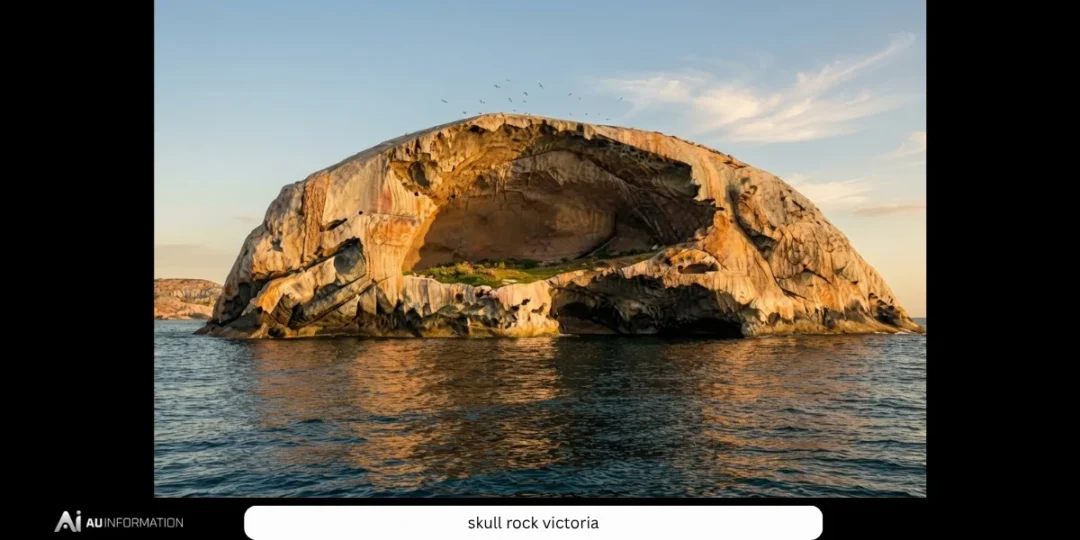
Along Victoria’s rugged southern coastline lies a natural wonder that looks almost like it belongs in a fantasy landscape. Rising from the waters near Wilsons Promontory National Park, Skull Rock Victoria is one of Australia’s most unusual geological formations — a giant granite island with a massive sea cave carved through its centre.
Officially known as Cleft Island, the landmark earned its famous nickname because the enormous opening in the rock resembles the shape of a human skull when viewed from the right angle. Created over millions of years by powerful natural forces, Skull Rock has become one of Victoria’s most fascinating coastal attractions, attracting photographers, nature lovers and adventure travellers.
Unlike many famous landmarks that can be reached by road or walking tracks, Skull Rock remains a mysterious offshore destination. Visitors usually experience it from the water on boat tours departing from areas around Wilsons Promontory, making the journey itself part of the adventure.
Where Is Skull Rock Victoria Located?
Skull Rock is located in the Anser Group of islands, offshore from Wilsons Promontory in Gippsland, Victoria.
The area is part of the protected Wilsons Promontory Marine National Park, a region known for dramatic coastal landscapes, rich marine ecosystems and unique geological features.
Wilsons Promontory, often called “The Prom” by locals, is one of Victoria’s most treasured natural areas. It is famous for:
- Pristine beaches
- Granite mountains
- Coastal walking trails
- Native wildlife
- Marine environments
- Scenic islands
Skull Rock sits among these remarkable landscapes, offering visitors a rare view of Victoria’s offshore wilderness.
Why Is It Called Skull Rock?
The name “Skull Rock” comes from the island’s extraordinary appearance.
From certain viewpoints, the huge cave opening creates the illusion of:
- Eye sockets
- A hollow skull shape
- A dramatic natural face carved into stone
The effect is especially noticeable when viewed from the sea, where the opening cuts through the granite island and creates a powerful silhouette.
However, the formation is not the result of human activity. It is entirely natural, shaped slowly by geological processes over millions of years.
The Geological Story Behind Skull Rock
Skull Rock is a remarkable example of coastal erosion and the power of nature.
The island is made from granite, a hard rock formed deep beneath the Earth’s surface millions of years ago. Over time, geological changes exposed the granite, and natural forces began reshaping it.
The massive cave was formed through a combination of:
- Wave erosion
- Wind exposure
- Weathering
- Changing sea levels
- Natural fractures in the rock
For thousands of years, waves repeatedly struck the weaker sections of the granite. Gradually, the opening expanded into the enormous cavern visible today.
The result is a spectacular example of how landscapes evolve over geological time.
The Size and Scale of Skull Rock
One of the most impressive aspects of Skull Rock is its enormous size.
The island is approximately:
- 300 metres long
- 200 metres wide
Its central sea cave is even more impressive, measuring approximately:
- 130 metres wide
- 60 metres high
Standing near the formation from the water gives visitors a true sense of scale. The cave is large enough to create a dramatic natural cathedral-like space inside the island.
Visiting Skull Rock: How Can You See It?
Because Skull Rock is located offshore and has difficult access, most visitors see it through guided boat tours.
These tours typically provide:
- Close views of Skull Rock
- Coastal sightseeing
- Wildlife viewing opportunities
- Photography locations
- Information about local history and geology
The boat journey around Wilsons Promontory is often considered just as memorable as the destination itself.
Depending on weather conditions, visitors may also see:
- Australian fur seals
- Dolphins
- Sea birds
- Marine wildlife
The surrounding waters provide an important habitat for many species.
Best Time to Visit Skull Rock Victoria
The best time to experience Skull Rock depends largely on weather and sea conditions.
Generally, the warmer months between late spring and early autumn provide:
- Calmer seas
- Longer daylight hours
- Better photography conditions
- More comfortable boat trips
However, Victoria’s southern coastline can experience changing weather conditions throughout the year.
Before planning a trip, visitors should check:
- Tour availability
- Weather forecasts
- Sea conditions
- Safety requirements
Boat operators may cancel trips during rough conditions to protect passenger safety.
Photography Tips for Skull Rock
Skull Rock is one of Victoria’s most photogenic natural landmarks.
For the best photographs:
Capture Different Angles
The skull appearance depends heavily on viewing angle. Images from the water often create the most dramatic effect.
Use Morning or Afternoon Light
Soft natural light can highlight the texture of the granite and make the cave appear more dramatic.
Include Scale
Adding a boat, person or nearby wildlife in the frame helps show the enormous size of the formation.
Respect the Environment
Because Skull Rock is part of a protected marine area, visitors should avoid disturbing wildlife or damaging natural features.
Wildlife Around Wilsons Promontory
The journey to Skull Rock is not only about geology. The surrounding marine environment is home to diverse wildlife.
Common sightings may include:
- Seals resting on rocks
- Dolphins travelling through coastal waters
- Seabirds flying around islands
- Marine species living beneath the surface
Wilsons Promontory is also famous for land-based wildlife, including:
- Kangaroos
- Wombats
- Emus
- Native birds
The combination of coastal scenery and wildlife makes the region one of Victoria’s most rewarding nature destinations.
Common Mistakes Visitors Should Avoid
Planning a Skull Rock visit requires preparation. Some common mistakes include:
Assuming You Can Walk There
Skull Rock is an offshore island and is not accessible through normal walking tracks.
Ignoring Weather Conditions
The coastline can become dangerous during poor weather. Always follow tour operator advice.
Forgetting Camera Protection
Sea spray can damage cameras and phones. Waterproof protection is recommended.
Expecting Guaranteed Wildlife Sightings
Marine wildlife is unpredictable. Tours provide opportunities, but sightings cannot be guaranteed.
The Importance of Protecting Skull Rock
Natural landmarks like Skull Rock are valuable not only for tourism but also for science and conservation.
The formation provides insights into:
- Geological history
- Coastal erosion
- Marine ecosystems
- Climate impacts
Protecting these environments ensures future generations can continue experiencing Victoria’s unique natural landscapes.
Visitors can help by:
- Following park rules
- Avoiding litter
- Respecting wildlife
- Supporting responsible tourism operators
The Future of Skull Rock Tourism
As interest in nature-based travel continues to grow, destinations like Skull Rock are becoming increasingly popular.
Modern travellers are looking for experiences that combine:
- Adventure
- Education
- Photography
- Wildlife encounters
- Natural beauty
Skull Rock represents exactly this type of experience. It offers something different from traditional tourist attractions — a chance to witness a landscape created by millions of years of natural history.
Conclusion
Skull Rock Victoria is one of Australia’s most fascinating coastal landmarks. With its enormous sea cave, skull-like appearance and dramatic location near Wilsons Promontory, it represents the incredible power of nature and time.
Although it cannot be reached by road or hiking trail, the journey by boat makes the experience even more special. Visitors are rewarded with breathtaking views, unique geology and the chance to explore one of Victoria’s most unusual natural wonders.
For travellers seeking adventure beyond ordinary sightseeing, Skull Rock is a reminder that some of the world’s most extraordinary places are hidden just offshore, waiting to be discovered.




No Comments