
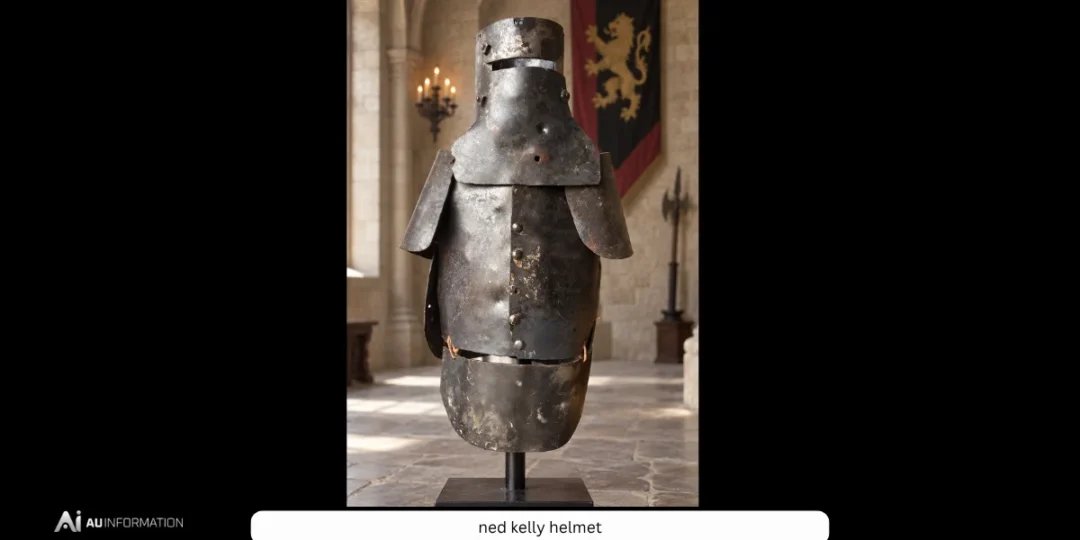
Few objects in Australian history are as instantly recognisable as Ned Kelly’s helmet.
With its rounded iron shape, narrow eye openings and intimidating appearance, the homemade armour has become one of the most powerful symbols of Australia’s bushranger era.
More than just a piece of protective equipment, the helmet represents a complicated chapter in Australian history — one involving crime, rebellion, social inequality, law enforcement and the creation of national legends.
For some Australians, Ned Kelly remains a symbol of resistance against authority and a figure of folk hero status. For others, he was a dangerous outlaw responsible for violent crimes. The helmet sits at the centre of this debate because it represents both sides of his story.
Created for the Kelly Gang’s final confrontation with police at Glenrowan in 1880, the iron helmet has survived as a remarkable historical artefact and continues to attract interest from historians, tourists and people fascinated by Australian identity.
What Is Ned Kelly’s Helmet?
Ned Kelly’s helmet was a handmade iron helmet worn by bushranger Ned Kelly during the Glenrowan siege in Victoria in 1880.
It formed part of a larger suit of homemade armour created by Kelly and his gang members.
The armour included:
- helmets;
- breastplates;
- back plates;
- shoulder protection.
The purpose was simple: protect during armed confrontations with police.
The Kelly Gang believed the armour would allow them to survive gunfire and continue fighting during their final stand.
The helmet became the most famous part of the armour because of its unique appearance and its connection to one of Australia’s most dramatic historical events.
The Creation of the Kelly Gang Armour
The Kelly Gang’s armour was not professionally manufactured.
Instead, it was created using materials available in rural Australia during the late 19th century.
Historical evidence suggests the armour was made from:
- old farming equipment;
- iron plough mouldboards;
- metal plates;
- other repurposed materials.
The process required significant labour.
The iron pieces were heated, shaped and modified into protective coverings.
The helmet’s design reflected the practical needs of bush warfare rather than traditional military engineering.
Its distinctive features included:
Rounded Shape
The curved design helped deflect bullets and provided protection around the head.
Narrow Eye Slits
The small openings allowed the wearer to see while limiting exposure to gunfire.
Heavy Iron Construction
The helmet provided protection but also created major disadvantages because of its weight.
The Glenrowan Siege and the Helmet’s Final Battle
The helmet became famous because of the events at Glenrowan on 28 June 1880.
The Kelly Gang had planned a major confrontation with police after years of conflict with authorities.
Their plan involved:
- stopping a police train;
- using the railway line as part of an ambush;
- wearing armour during the battle.
However, the plan failed.
A local schoolteacher, Thomas Lloyd, warned authorities about the gang’s intentions, allowing police to prepare.
When the confrontation occurred, police surrounded the Glenrowan Hotel where the gang was located.
The armour provided some protection, but it also created problems.
The heavy metal suits made movement difficult, and the narrow viewing gaps limited vision.
During the battle, Ned Kelly was able to continue fighting even after suffering gunshot wounds because of his armour.
Eventually, he was captured after police targeted his exposed legs.
The Design: Why Was Ned Kelly’s Helmet So Unique?
The helmet’s appearance has become almost mythical.
Unlike traditional helmets used by soldiers, Kelly’s design was simple, unusual and instantly identifiable.
Its main characteristics include:
Protection Over Comfort
The helmet was designed for survival rather than mobility.
Psychological Impact
The armour created a frightening appearance that may have been intended to intimidate opponents.
Symbolic Design
Over time, the helmet became associated with rebellion and resistance.
The image of the armoured bushranger became one of the most recognisable visual symbols in Australian culture.
Ned Kelly: Hero or Criminal?
The helmet’s meaning depends heavily on how people view Ned Kelly himself.
The debate surrounding Kelly has continued for more than a century.
The Folk Hero Perspective
Supporters argue that Kelly represented rural Australians who felt ignored by authorities.
They point to:
- conflicts between poor farming families and police;
- dissatisfaction with government policies;
- Kelly’s statements about justice and fairness.
For these people, the helmet represents defiance and resistance.
The Criminal Perspective
Others argue that Kelly was responsible for serious crimes.
Critics highlight:
- armed robberies;
- violence;
- the killing of police officers;
- threats against civilians.
From this perspective, the helmet represents criminal activity rather than heroism.
The ongoing debate is one reason the helmet remains such a fascinating historical object.
Where Is Ned Kelly’s Helmet Today?
Ned Kelly’s armour has been preserved as one of Australia’s most important historical collections.
Different pieces of the armour have been displayed in museums and exhibitions over the years.
The helmet has been particularly valuable because it provides a direct physical connection to the events of 1880.
It allows visitors to examine an object that was actually used during one of Australia’s most famous historical confrontations.
Museums display the armour not simply as an object of fascination but as a way to explore:
- colonial history;
- law enforcement;
- rural life;
- Australian identity.
Why Is the Ned Kelly Helmet Still Famous?
More than 140 years after the Glenrowan siege, the helmet remains popular because it represents several major themes.
Australian Identity
The helmet has become connected with ideas of independence and questioning authority.
Historical Curiosity
People are fascinated by how ordinary materials were transformed into battlefield protection.
Pop Culture Influence
Ned Kelly’s image has appeared in:
- films;
- books;
- artwork;
- documentaries;
- tourism campaigns.
The helmet has become part of Australia’s visual identity.
Common Misconceptions About Ned Kelly’s Helmet
Several myths surround the famous armour.
Myth 1: The Armour Made Kelly Invincible
The helmet provided protection but did not make him immune to bullets.
His legs remained vulnerable, which ultimately led to his capture.
Myth 2: The Armour Was Professionally Made
The armour was created using basic materials and rural tools, not advanced manufacturing.
Myth 3: The Helmet Represents Only One View of Kelly
The object carries different meanings depending on historical interpretation.
It can represent rebellion, violence, injustice or survival.
The Historical Importance of Preserving the Helmet
Historical objects provide more than visual interest.
They allow future generations to study the past through physical evidence.
Ned Kelly’s helmet helps historians understand:
- technology available to rural communities;
- conflicts between communities and authorities;
- the development of Australian folklore.
Preserving such objects allows society to examine history from multiple perspectives.
Ned Kelly Helmet in Modern Culture
Today, the helmet remains one of Australia’s most recognised historical images.
It appears in:
- educational materials;
- museums;
- documentaries;
- cultural discussions.
Artists and filmmakers continue to revisit Ned Kelly because his story raises questions that remain relevant:
- What makes someone a hero?
- How should society judge historical figures?
- How do communities remember controversial people?
The helmet continues to encourage discussion rather than providing simple answers.
Future Legacy of Ned Kelly’s Helmet
The interest surrounding Ned Kelly’s helmet is unlikely to disappear.
As Australia continues examining its history, the armour will remain an important symbol of the nation’s colonial past.
Future generations will continue debating Kelly’s actions and the meaning of his image.
However, one fact remains clear:
The helmet is one of the most significant historical objects ever associated with Australia.
Conclusion
Ned Kelly’s helmet is far more than a piece of iron armour.
It is a symbol of one of Australia’s most dramatic historical stories — a story involving crime, rebellion, conflict and national identity.
Created for a desperate final battle at Glenrowan, the helmet became something much larger than its original purpose.
Whether viewed as a symbol of resistance or a reminder of criminal violence, it remains an unforgettable part of Australian history.
More than a century later, Ned Kelly’s helmet continues to capture the imagination because it represents a question Australia still debates today: how should we remember the people and events that shaped our past?



September 5, 2026 at 2:26 pm
Great Information.